↓
 

Huntsville Brick Stone

Brick & Stone Masons in Huntsville, AL

Huntsville Brick Stone
  • Home
  • Brick Masonry
  • Stone Masonry
  • Indoor Fireplaces
  • Outdoor Fireplaces
  • Custom Tile Showers
  • Retaining Walls
  • Gallery
Home→Tags stone mason

Tag Archives: stone mason

Stone Masonry Steps That Add Curb Appeal Without Looking Overbuilt

Huntsville Brick Stone Posted on June 25, 2026 by HuntsvilleBSJune 25, 2026
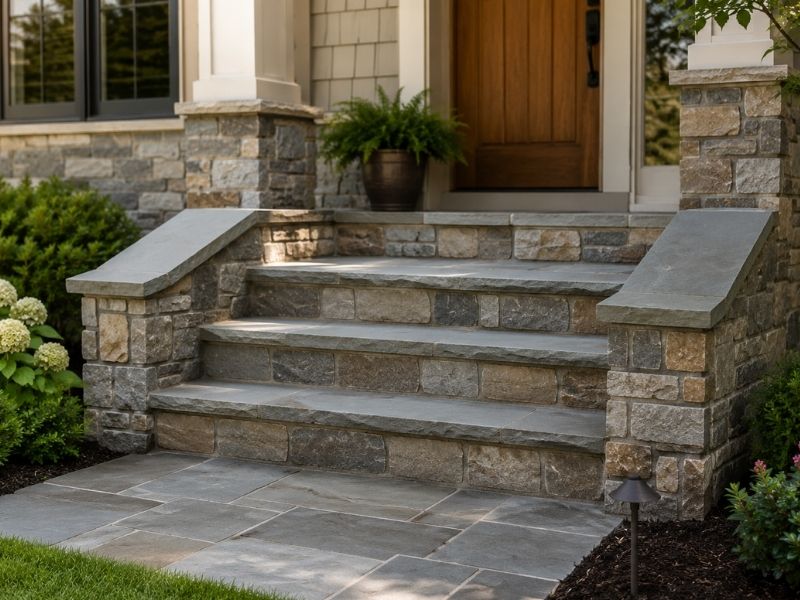
Well-proportioned stone masonry steps leading to a home entrance with balanced design and natural curb appeal

Stone steps can make an entrance look custom, or they can look like a fortress someone dropped on the front lawn. The line between the two is thinner than most builders think. Good stone masonry at the front door reads as quiet and expensive. Overbuilt stone reads as heavy and try-hard. The difference comes down to a few choices about size, proportion and material, and none of them cost more to get right.

Overbuilt steps share a look. Everything is too big. The treads are massive, the walls flanking the steps are too tall and the stone caps are thick and chunky. Piers the size of mailboxes guard a normal front door. The steps stop being an entrance and turn into a monument. Heavy proportions don’t read as grand. They read as a builder who didn’t know when to stop.

Scale the Steps to the House

The mass of the steps has to match the size of the house. A modest one-story home gets swallowed by a wide, grand stone staircase. The steps end up bigger than the thing they lead to, and the whole front looks off.

Match the width of the steps to the door and the porch, not to the entire front of the house. Keep any walls beside the steps low. The entrance should feel open, not walled in. Let the house stay the main event and let the steps lead you to it.

Get the Step Proportions Right

People feel a good step before they notice the stone. Comfortable steps read as quality on their own. Code sets the limits here. The riser, which is the vertical part, can be at most 7 and three-quarter inches. The tread, the part you step on, has to be at least 10 inches deep.

Those are the maximums and minimums, not the targets. A front entrance feels best when you go lower and deeper. Aim for a riser around 6 inches and a tread around 13 inches. A handy check is the comfort rule: two risers plus one tread should land between 24 and 25 inches.

One more thing matters more than people expect. Keep every riser the same height. Code allows only a 3 eighths inch difference across a flight, and your foot catches anything bigger right away. Even risers look intentional. Uneven ones look like a mistake.

Let the Stone Be Quiet

Restraint in the material does most of the work. Pick one stone, not three. Choose a natural, muted color that goes with the front of the house instead of fighting it. Busy blends and high-contrast patterns pull the eye for the wrong reasons.

Echo something the house already has. If the foundation or a porch pier shows stone, match it or stay close. Keep the mortar joints tight and even instead of fat and sloppy. Quiet stone reads as expensive. Loud stone reads as a kit from the home center.

Get the Look Without the Mass

This is the part that saves money. Solid stone steps are heavy. They need big footings and a lot of material, and the cost climbs fast. You don’t need them.

A stone veneer over a poured concrete or block core gives the same face for far less. The core carries the load. The stone shows where people actually see it. You get the custom look without overbuilding the structure or the budget, and most people can’t tell the difference from the sidewalk.

A Quick Gut Check Before You Build

Run through these before the first stone is set.

  • Match the step width to the door and porch, not the whole front of the house.
  • Keep any side walls low so the entrance stays open.
  • Aim for a riser near 6 inches and a tread near 13 inches.
  • Keep every riser within 3 eighths of an inch of the others.
  • Pick one stone and one muted color that echoes something on the house.
  • Build over a concrete or block core to get the look without the mass.

Why Restraint Sells

Overbuilt stone steps don’t add the value builders expect. They cost more, they date quickly and they can make a house look smaller by comparison. A house that has to compete with its own front steps loses.

Restrained steps do the opposite. They read as custom and they don’t go out of style. They let the house sell itself instead of shouting over it. For a builder, the quiet version is usually cheaper and more appealing at the same time. That combination is rare, so take it when you can get it.

Frequently Asked Questions

What makes stone steps look overbuilt?

Overbuilt steps are out of scale with the house. The treads, side walls and caps are too big, and tall piers crowd a normal door. The stone ends up competing with the home instead of leading to it.

How wide should front stone steps be?

Match the width to the front door and the porch, not the whole face of the house. Steps that span the entire front look heavy on a normal home. The entrance should feel in proportion with the door it serves.

What riser and tread size feels best for entrance steps?

Code caps the riser at 7 and three-quarter inches and sets a 10 inch minimum tread. For a gracious feel, go lower and deeper, near a 6 inch riser and a 13 inch tread. Keep every riser the same height so the steps feel even underfoot.

Do stone steps have to be solid stone?

No. A stone veneer over a concrete or block core gives the same look for far less weight and cost. The core handles the load while the stone provides the finished face.

Does one stone color look better than a blend?

Usually, yes. One stone in a muted color reads as calm and custom. Busy multi-color blends tend to look loud and draw attention for the wrong reasons.
Posted in Stone Masonry | Tagged stone, stone mason, stone masonry

Why Stone Walls and Veneer Fail: Stone Mason Guide

Huntsville Brick Stone Posted on May 8, 2026 by HuntsvilleBSMay 8, 2026
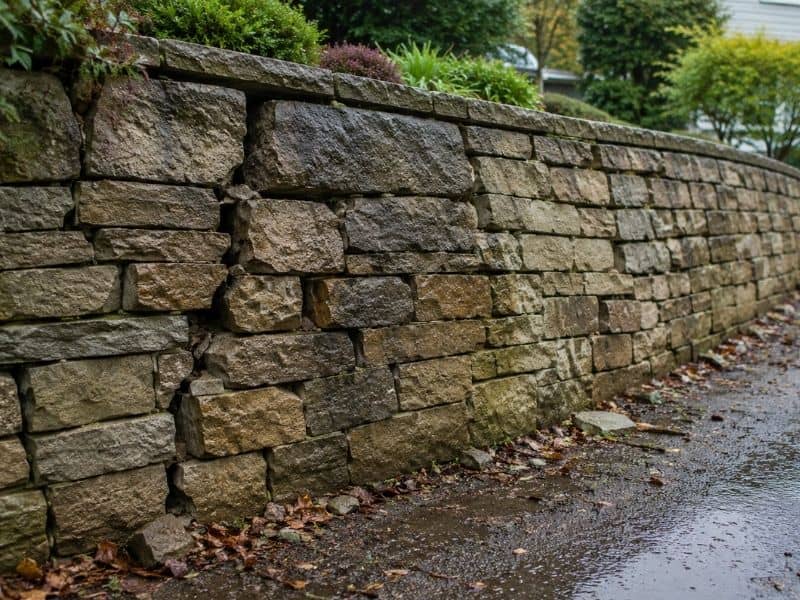
Stone mason inspecting a cracked retaining wall with visible water damage near a residential home

Stone walls and veneer can make a home look strong, warm, and timeless. Many homeowners choose stone for fireplaces, retaining walls, entryways, patios, and outdoor kitchens because it adds beauty and value. A skilled stone mason can help homeowners build features that last for years. Still, problems can show up sooner than expected when the installation or drainage is not done correctly.

A wall starts to lean. Small cracks spread across the mortar. Stones loosen after heavy rain. Veneer begins to pull away from the house. At first, the damage may seem minor. However, these signs usually point to a deeper problem underneath.

Many homeowners feel frustrated when this happens. They spent good money on the project, yet the stonework already looks worn or unsafe.

In most cases, the stone itself is not the problem. The real issue comes from poor drainage, weak installation, or movement in the ground below. An experienced stone mason can often spot these warning signs early and prevent larger repairs later.

What Causes Stone Walls and Veneer to Fail?

Stone walls and veneer usually fail because of trapped moisture, poor drainage, shifting soil, weak foundations, or improper installation. In Huntsville, heavy rain and changing soil conditions often place extra stress on masonry structures, especially retaining walls and exterior stone veneer systems.

How Water Damages Stone Walls

Water creates some of the biggest problems in masonry work.

When rainwater moves behind a stone wall, pressure starts to build. Over time, that moisture weakens mortar joints and shifts the soil underneath. Then the wall slowly begins to move.

This happens often with retaining walls in sloped yards around Huntsville. Heavy rain can push water into the soil behind the wall. If the builder skipped proper drainage, the wall may bulge, crack, or lean forward.

According to masonry experts, poor drainage remains one of the leading causes of retaining wall failure because water pressure builds behind the structure over time.

Stone veneer also struggles with trapped moisture. Water can slip behind the veneer when flashing or sealing fails. Then the surface starts separating from the structure underneath.

Many homeowners first notice:

  • cracks in mortar
  • white stains on stone
  • loose veneer pieces
  • wet spots near walls
  • stones shifting out of place

These problems rarely fix themselves. Instead, they usually grow worse after each storm season.

How Moisture Causes Stone Veneer Separation

Stone veneer systems require proper flashing and moisture barriers to prevent water from reaching the structure underneath.

When installers rush this step, water slowly enters behind the veneer. Then moisture weakens the adhesive and backing materials over time.

Eventually, homeowners may notice:

  • gaps between the veneer and wall
  • crumbling mortar joints
  • stained surfaces
  • loose stones near corners and windows

These problems often appear after heavy storms or long periods of humidity.

Why Weak Foundations Create Masonry Problems

Stone walls need stable, compacted ground to stay strong over time. When builders skip proper foundation preparation, the soil underneath shifts and settles. That movement causes cracks, leaning walls, loose stones, and long-term structural damage that grows worse with moisture exposure.

What Happens When Soil Shifts Under Stonework

A stone wall needs a stable base. Without one, the structure cannot stay strong for long.

Some contractors rush the groundwork to save time. They place stone over soft soil or skip proper compaction. At first, everything may look fine. However, the ground slowly settles over time.

As the soil shifts, the stonework shifts too.

This problem often affects:

  • retaining walls
  • garden walls
  • stone steps
  • patio borders
  • mailbox columns

Even small movements can create visible cracks. Then water enters those cracks and speeds up the damage.

How Soil Affects Masonry Structures

Huntsville homes often deal with changing soil moisture levels throughout the year. During wet months, the soil expands. During dry periods, it shrinks. That constant movement places stress on stone structures.

Expansive clay soil can shift significantly during wet and dry weather cycles, placing stress on retaining walls and masonry structures.

Because of this, strong preparation matters just as much as the stone itself.

Can Cheap Materials Cause Stone Veneer Failure?

Low-quality mortar, weak adhesives, and poorly installed veneer systems often fail faster in outdoor conditions. Huntsville weather exposes weak masonry materials to moisture, heat, and freeze-thaw cycles that slowly weaken the structure and shorten the life of the stonework.

Why Mortar Quality Matters

Not all masonry materials perform the same way.

Some builders use low-cost mortar or weak adhesive products that cannot handle long-term weather exposure. Others install thin veneer products without proper support behind them.

As a result, the veneer may loosen far earlier than expected.

In many cases, homeowners blame the stone. However, the real problem starts with the installation system underneath.

A skilled stone mason pays attention to:

  • drainage layers
  • mortar type
  • flashing details
  • support systems
  • expansion joints

These details may seem small, yet they make a huge difference over time.

How Weather Wears Down Weak Materials

Quality materials help stonework handle Huntsville’s changing weather conditions. Heat, humidity, and heavy rain can wear down weak systems quickly.

Water expands by nearly 9% when it freezes, which is why small cracks in mortar often grow larger during freeze-thaw cycles.

Well-built masonry walls can last for decades when contractors install proper drainage systems and stable foundations.

Why DIY Masonry Repairs Often Fail

Many DIY masonry repairs only hide visible damage without fixing the real problem underneath. Surface patching may temporarily cover cracks, but moisture, drainage problems, and foundation movement continue damaging the structure behind the stone or veneer.

Common DIY Masonry Repair Mistakes

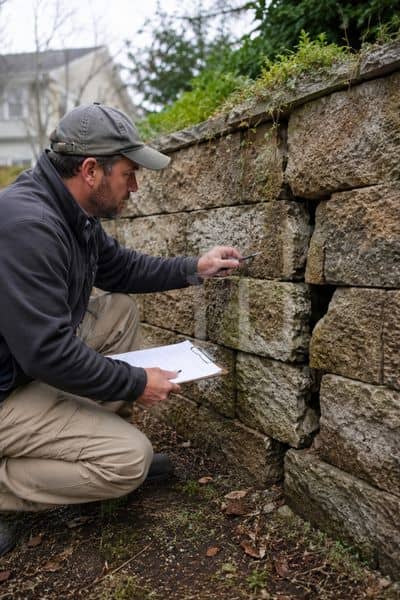
Stone mason inspecting cracks and moisture damage on a residential retaining wall during a masonry evaluation

Many homeowners try fixing cracks or loose stones themselves. While that may sound simple, masonry repairs often need more than surface patching.

For example, filling a crack with store-bought mortar does not solve hidden drainage problems behind the wall. The crack may disappear for a short time, but the movement underneath continues.

DIY repairs also create issues like:

  • mismatched mortar color
  • trapped moisture
  • uneven surfaces
  • poor bonding
  • additional cracking

Some homeowners even use the wrong products completely. Certain repair mixes work for concrete but not natural stone.

Then the repair fails even faster than the original problem.

When Homeowners Should Call a Stone Mason

A professional stone mason looks deeper before making repairs. They check whether the issue involves structure, drainage, moisture, or foundation movement. That step helps prevent repeated repairs later.

Homeowners should consider professional masonry repair when they notice:

  • leaning retaining walls
  • widening cracks
  • separating veneer
  • loose stones
  • repeated water problems
  • crumbling mortar joints

How Weather Damages Stone Structures

Huntsville weather creates constant stress on stone walls, retaining walls, and veneer systems. Heavy rain, humidity, and freezing temperatures allow water to enter small cracks, which leads to expanding damage, shifting mortar, and long-term structural wear.

How Heavy Rain Impacts Retaining Walls

Weather plays a major role in masonry damage across North Alabama.

Huntsville sees:

  • strong rainstorms
  • humid summers
  • freezing winter nights
  • rapid temperature swings

These conditions place constant stress on stonework.

Water enters small cracks during rainy weather. Then cold temperatures cause that trapped water to expand. As the water freezes and thaws, the cracks grow larger.

Outdoor fireplaces, chimneys, retaining walls, and stone veneer often show damage first because they stay exposed year-round.

Homes built on sloped lots may also deal with heavy runoff after storms. That moving water slowly washes soil away from retaining walls and patio areas.

Without proper drainage control, the structure becomes weaker over time.

What Warning Signs Show a Stone Wall Is Failing?

Small warning signs often appear before major masonry failure happens. Growing cracks, leaning walls, loose stones, white stains, and separating veneer usually point to moisture problems, foundation movement, or failing drainage systems that need professional attention.

Most failing stone projects do not collapse overnight.

Instead, the damage starts small.

A homeowner notices a hairline crack. Then part of the wall leans slightly forward. A few months later, stones loosen after a storm.

These early signs matter because they often point to deeper movement underneath.

Common warning signs include:

  • growing cracks
  • leaning walls
  • loose stone caps
  • separating veneer
  • crumbling mortar
  • white powder stains
  • pooling water nearby

Catching these problems early usually lowers repair costs. However, waiting too long can turn a simple repair into a full rebuild.

That is especially true for retaining walls holding back heavy soil pressure.

Why Choosing the Right Stone Mason Matters

Good stonework should last for many years. However, long-lasting results depend on proper planning, drainage, and installation from the start.

An experienced stone mason understands how moisture, soil movement, and weather affect masonry systems over time. They also know when a wall needs simple repairs and when rebuilding makes more sense.

For homeowners, that knowledge matters.

Stone walls and veneer add beauty, strength, and value to a property. Still, poor workmanship can lead to expensive frustration later.

The good news is that most masonry problems show warning signs early. When homeowners act quickly, they often avoid major structural damage and larger repair costs down the road.

Posted in Masonry, Stone | Tagged stone, stone mason

Leave a Review on Google

Leave a Google Review

Leave a Review on YELP

Leave a Yelp Review

Leave a Review on Facebook

Leave a Review on Facebook

CONTACT US

© Copyright 2021 Huntsville Brick & Stone
​​​​Huntsville, Alabama ​35803
Phone: (256) 804-0025

Privacy Policy | Terms of Use

Web Development and SEO by:
Southern SEO

↑