Stone Masonry Steps That Add Curb Appeal Without Looking Overbuilt
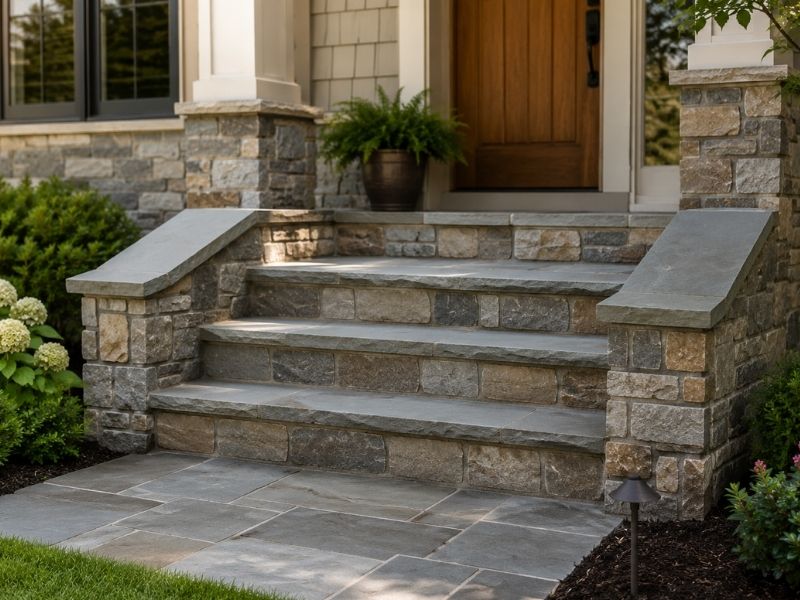
Stone steps can make an entrance look custom, or they can look like a fortress someone dropped on the front lawn. The line between the two is thinner than most builders think. Good stone masonry at the front door reads as quiet and expensive. Overbuilt stone reads as heavy and try-hard. The difference comes down to a few choices about size, proportion and material, and none of them cost more to get right.
Overbuilt steps share a look. Everything is too big. The treads are massive, the walls flanking the steps are too tall and the stone caps are thick and chunky. Piers the size of mailboxes guard a normal front door. The steps stop being an entrance and turn into a monument. Heavy proportions don’t read as grand. They read as a builder who didn’t know when to stop.
Scale the Steps to the House
The mass of the steps has to match the size of the house. A modest one-story home gets swallowed by a wide, grand stone staircase. The steps end up bigger than the thing they lead to, and the whole front looks off.
Match the width of the steps to the door and the porch, not to the entire front of the house. Keep any walls beside the steps low. The entrance should feel open, not walled in. Let the house stay the main event and let the steps lead you to it.
Get the Step Proportions Right
People feel a good step before they notice the stone. Comfortable steps read as quality on their own. Code sets the limits here. The riser, which is the vertical part, can be at most 7 and three-quarter inches. The tread, the part you step on, has to be at least 10 inches deep.
Those are the maximums and minimums, not the targets. A front entrance feels best when you go lower and deeper. Aim for a riser around 6 inches and a tread around 13 inches. A handy check is the comfort rule: two risers plus one tread should land between 24 and 25 inches.
One more thing matters more than people expect. Keep every riser the same height. Code allows only a 3 eighths inch difference across a flight, and your foot catches anything bigger right away. Even risers look intentional. Uneven ones look like a mistake.
Let the Stone Be Quiet
Restraint in the material does most of the work. Pick one stone, not three. Choose a natural, muted color that goes with the front of the house instead of fighting it. Busy blends and high-contrast patterns pull the eye for the wrong reasons.
Echo something the house already has. If the foundation or a porch pier shows stone, match it or stay close. Keep the mortar joints tight and even instead of fat and sloppy. Quiet stone reads as expensive. Loud stone reads as a kit from the home center.
Get the Look Without the Mass
This is the part that saves money. Solid stone steps are heavy. They need big footings and a lot of material, and the cost climbs fast. You don’t need them.
A stone veneer over a poured concrete or block core gives the same face for far less. The core carries the load. The stone shows where people actually see it. You get the custom look without overbuilding the structure or the budget, and most people can’t tell the difference from the sidewalk.
A Quick Gut Check Before You Build
Run through these before the first stone is set.
- Match the step width to the door and porch, not the whole front of the house.
- Keep any side walls low so the entrance stays open.
- Aim for a riser near 6 inches and a tread near 13 inches.
- Keep every riser within 3 eighths of an inch of the others.
- Pick one stone and one muted color that echoes something on the house.
- Build over a concrete or block core to get the look without the mass.
Why Restraint Sells
Overbuilt stone steps don’t add the value builders expect. They cost more, they date quickly and they can make a house look smaller by comparison. A house that has to compete with its own front steps loses.
Restrained steps do the opposite. They read as custom and they don’t go out of style. They let the house sell itself instead of shouting over it. For a builder, the quiet version is usually cheaper and more appealing at the same time. That combination is rare, so take it when you can get it.
Frequently Asked Questions
What makes stone steps look overbuilt?
Overbuilt steps are out of scale with the house. The treads, side walls and caps are too big, and tall piers crowd a normal door. The stone ends up competing with the home instead of leading to it.
How wide should front stone steps be?
Match the width to the front door and the porch, not the whole face of the house. Steps that span the entire front look heavy on a normal home. The entrance should feel in proportion with the door it serves.
What riser and tread size feels best for entrance steps?
Code caps the riser at 7 and three-quarter inches and sets a 10 inch minimum tread. For a gracious feel, go lower and deeper, near a 6 inch riser and a 13 inch tread. Keep every riser the same height so the steps feel even underfoot.
Do stone steps have to be solid stone?
No. A stone veneer over a concrete or block core gives the same look for far less weight and cost. The core handles the load while the stone provides the finished face.
Does one stone color look better than a blend?
Usually, yes. One stone in a muted color reads as calm and custom. Busy multi-color blends tend to look loud and draw attention for the wrong reasons.
