↓
 

Huntsville Brick Stone

Brick & Stone Masons in Huntsville, AL

Huntsville Brick Stone
  • Home
  • Brick Masonry
  • Stone Masonry
  • Indoor Fireplaces
  • Outdoor Fireplaces
  • Custom Tile Showers
  • Retaining Walls
  • Gallery
Home→Categories Masonry 1 2 >>

Category Archives: Masonry

Post navigation

← Older posts

Is Painted Brick Worth It? 

Huntsville Brick Stone Posted on June 5, 2026 by HuntsvilleBSMay 29, 2026
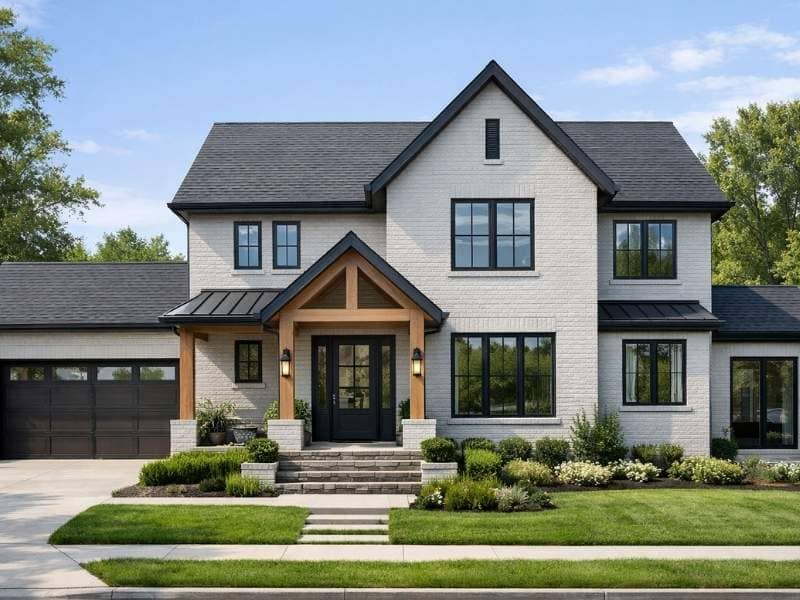
Modern home with a painted brick exterior showing the updated look many homeowners consider before painting brick

Painted brick is having a moment. White exteriors, limewashed finishes, and soft gray tones are popular right now, and the appeal is easy to understand. A coat of paint can completely change how a home looks from the street.

But painting a brick is not like painting a wall. It is a long-term commitment, and for many homes, it is permanent. Here is the honest answer from a mason who has seen both the good outcomes and the regrets.

It Depends on Your Situation

Painted brick can look great and work well in the right circumstances. But for most homeowners with natural brick in decent condition, it is not worth it. The upfront cost, the ongoing maintenance, the impact on resale value, and the difficulty of reversing the decision all stack up against it.

That does not mean painting is always the wrong call. It means you should go in knowing exactly what you are signing up for.

Painting Brick Is Permanent

This is the part most homeowners do not fully grasp until after the fact. Once brick is painted, getting back to the natural surface is extremely difficult. Removing paint requires chemical strippers or sandblasting. Both are expensive, labor-intensive, and can cause lasting damage. Sandblasting can erode the brick face permanently, leaving a surface that absorbs moisture faster than the original.

Most masonry professionals consider painting brick a one-way decision. If you change your mind five years from now, undoing it will cost more than the original paint job and may leave your brick in worse condition than before.

Think carefully about whether the look you want today is one you will still want in ten or fifteen years.

What Paint Does to Brick Over Time

Brick is a porous, breathable material. It absorbs small amounts of moisture and releases it as temperatures change. Paint creates a film over the surface that can slow or block that process.

When moisture gets trapped behind the paint layer, it leads to peeling, efflorescence (the white chalky deposits that form on masonry), and in colder climates, freeze-thaw damage that causes brick to crack and flake. This is more likely when the wrong paint is used, when existing moisture issues are not addressed, or when the surface is not properly prepped.

The Right Paint Makes a Real Difference

If you have decided that painting is the right move for your home, the type of paint you use matters more than most people realize.

Acrylic latex paint is the most common choice. It is affordable and easy to find, but on brick it typically lasts only 3 to 5 years before repainting is needed.

Mineral-based masonry paint chemically bonds to the brick rather than forming a surface film. It does not trap moisture, is more breathable, and lasts 20 or more years. It costs more upfront but saves on long-term maintenance.

Limewash soaks into the brick rather than sitting on top of it. It gives a soft, aged look, keeps the brick breathing, and fades gradually rather than chipping or peeling. For homeowners who want a fresh look without a fully permanent commitment, limewash is the option most masons recommend.

How Much Does It Cost to Paint a Brick House?

Painting a brick house costs between $2,000 and $8,000 on average, with most projects coming in around $7,000. That covers pressure washing, masonry primer, and the paint itself. Brick absorbs more paint per square foot than wood or vinyl and requires more prep work, which is why the cost runs higher than a standard exterior paint job.

Acrylic latex paint needs recoating every 3 to 5 years. Mineral-based paint extends that cycle to 20 or more years but costs more upfront. Factor in the full lifecycle cost before you commit to a paint job, not just the price of the first coat.

Does Painted Brick Hurt Your Home’s Value?

For most homes, painting natural brick does not increase resale value and can work against you. According to National Association of Realtors data, natural brick facades can return up to 80 percent of their additional cost at resale. Buyers respond to natural brick because it signals durability and low maintenance.

Painted brick changes that picture. Some buyers see it as a modern upgrade. Others view it as added maintenance or a sign of potential moisture problems underneath. Real estate professionals generally advise against painting unpainted brick before a sale. If your brick is already painted, that is less of a concern, but starting with natural brick and painting it to prepare for a sale is rarely the right strategy.

When Painted Brick Does Make Sense

There are situations where painting brick is a practical decision.

If your home has mismatched brick from a previous repair or addition, paint can unify the exterior and create a more consistent look. If the brick has a dated color that clashes with the rest of the home, the right paint can modernize the appearance without major construction. And if you plan to stay for many years and genuinely love the look of painted brick, that is reason enough.

The key is going in with a clear picture of what you are committing to. Know the paint type, understand the repainting schedule, and confirm the brick is in solid condition first. Painting over damaged, cracked, or wet brick hides the problem and makes it worse over time.

What a Mason Recommends

If your brick is in good shape and natural, leave it. Natural brick is one of the most durable and low-maintenance exterior materials a home can have, and it holds its value well over time.

If the appearance is bothering you, try having the exterior professionally cleaned before making any permanent decisions. Pressure washing and repointing worn mortar joints can make a dramatic difference while preserving everything good about the original brick.

If you genuinely want a lighter or more modern look, limewash is the path most masons would recommend. You get the aesthetic without fully closing the door on the brick underneath.
Posted in Masonry | Tagged Brick

Brick Patio vs. Stone Patio: Which One Is Actually Worth It?

Huntsville Brick Stone Posted on June 3, 2026 by HuntsvilleBSMay 29, 2026
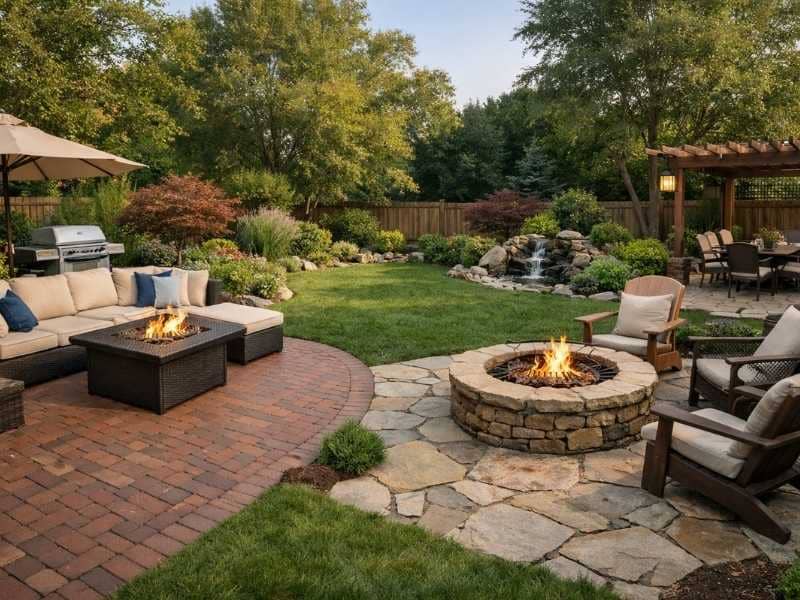
Brick patio and natural stone patio in a landscaped backyard with outdoor seating and fire features

If you are planning a new patio, the choice between brick and stone will shape how your backyard looks, how much you spend, and how long it holds up. Both are excellent masonry materials, but they are not the same. The right pick depends on your budget, your home’s style, and what you want from your outdoor space.

For most homeowners, brick pavers are the more budget-friendly and uniform choice. Natural stone pavers cost more upfront but last longer and tend to add more value at resale. The best option depends on your priorities: cost and consistency, or longevity and a premium look.

How Much Does Each Type Cost?

Brick patio: Installation runs $14 to $28 per square foot on average. A standard 200 square foot brick patio costs between $2,800 and $5,600 fully installed, including materials, labor, and a proper gravel base.

Stone patio: Natural stone installation runs $16 to $35 per square foot. That same 200 square foot patio in natural stone costs between $3,200 and $7,000 installed. Granite and slate sit at the higher end of that range. Flagstone typically falls in the middle.

The price gap between brick and stone is not as wide as most people expect. The bigger cost driver for both is the base preparation, the size of the patio, and the complexity of the pattern. Simple running bond patterns cost less to install. Intricate designs with curves and custom cuts cost more because they take longer to set.

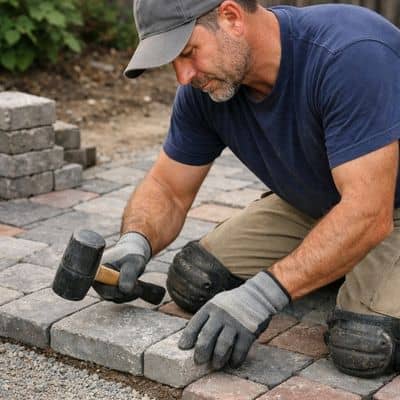
A proper gravel and sand base is not optional for either material. A well-built base prevents shifting, cracking, and drainage problems. Cutting corners on the foundation is the single most common reason patios fail early.

How Long Does Each One Last?

Mason installing patio pavers over a compacted gravel base for long-lasting outdoor construction

This is where the two materials start to pull apart.

Brick pavers last 30 to 50 years on average. Clay brick made from fired natural materials holds its color well over time because the color runs through the entire brick rather than sitting on the surface. With good maintenance, quality brick can last 100 years or more.

Natural stone pavers last 50 to 100 years or longer. Granite is especially hard and resists freeze-thaw damage better than most materials. Slate and bluestone also perform well in changing climates. Stone that has survived decades in nature will hold up on a patio with far less stress.

For comparison, poured concrete typically lasts 20 to 30 years before cracking and surface wear become serious issues. Both brick and stone outlast concrete by a wide margin.

Which One Needs More Maintenance?

Neither brick nor stone is high maintenance. But they do have different upkeep needs.

Brick patios need sealing every one to three years to protect against moisture and staining. Moss and weeds can grow between joints if the patio is in a shaded area, so periodic cleaning helps. Individual bricks can chip or crack over time, but the repair is straightforward. A mason can pull out a single brick and replace it without disturbing the rest of the patio.

Stone patios need sealing roughly once a year, depending on the stone type. Granite needs less frequent attention. Softer stones like sandstone need more. The joints between irregular stone pieces can attract weeds in wet climates, so checking them seasonally is a good habit. Like brick, individual stones can be replaced if damage occurs.

Both materials are easier to repair than poured concrete, where a crack often means resurfacing or replacing a large section.

Which One Looks Better With Your Home?

Neither material looks better in an absolute sense. It comes down to the style of your home and what fits naturally.

Brick pavers suit traditional, colonial, and craftsman-style homes well. The uniform shape and warm red or brown tones complement classic architecture. Brick also ties in naturally with homes that already have brick siding or a brick fireplace.

Natural stone pavers work well with a wider range of styles, from rustic to modern. Flagstone and bluestone are especially versatile. If your home has a stone exterior or you are building a patio alongside a stone retaining wall or stone fireplace, natural stone creates a cohesive, connected look throughout your outdoor space.

Which One Adds More Value to Your Home?

Both materials add measurable value, but stone tends to command a higher premium at resale. Industry data shows stone patios typically offer a return on investment of 70 to 80 percent. Brick patios deliver a solid 50 to 70 percent ROI.

Stone edges ahead because buyers see it as a permanent, high-end feature. Brick is attractive and durable, but natural stone signals a higher level of craftsmanship that tends to show up in appraisals.

That said, a well-built brick patio with clean joints and good borders still adds meaningful curb appeal. If your budget favors brick, it is a smart investment.

What a Mason Recommends

After years of installing both, here is the honest take: choose stone if your budget allows it and you want the patio to outlast the rest of your backyard. Choose brick if you want a classic look with dependable durability at a lower starting cost.

Either way, the material matters less than the installation. The quality of the base, the mortar, and the drainage underneath is what separates a patio that lasts from one that shifts and cracks within a few years.

Posted in Masonry | Tagged brick patio

Brick or Stone Mailbox? A Mason Weighs In

Huntsville Brick Stone Posted on May 29, 2026 by HuntsvilleBSMay 29, 2026
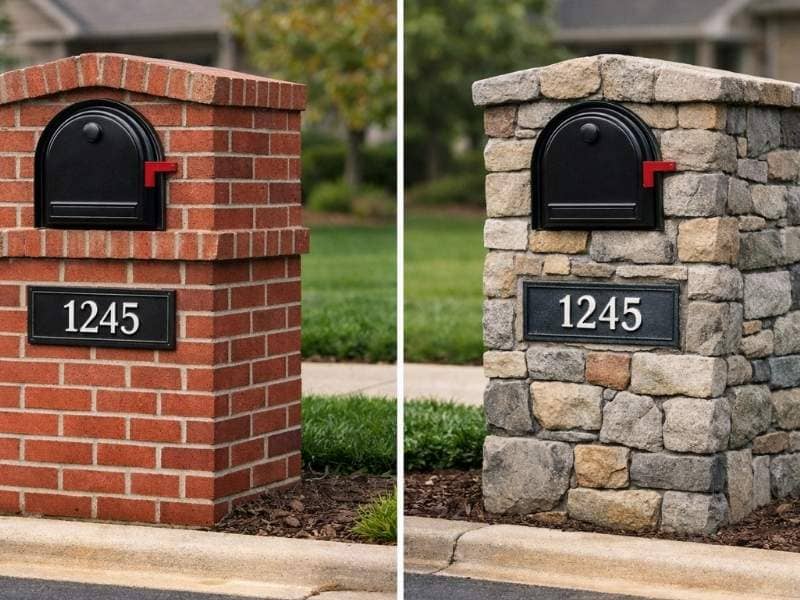
Brick and stone mailbox comparison showing two masonry mailbox styles in front of residential homes

Your mailbox is the first thing people notice when they pull up to your home. It sits at the edge of your property, setting the tone for everything behind it. Most homeowners ignore it until something goes wrong: a car clips it, the mortar starts crumbling, or a neighbor’s new masonry mailbox makes the old metal post look embarrassing.

If you are thinking about upgrading to a masonry mailbox, the first decision is material. Brick and stone are both excellent choices. They are durable, permanent, and far more attractive than anything made from wood or metal. But they are not the same, and the right choice depends on your home.

According to the National Association of Realtors, 99% of real estate agents believe curb appeal attracts strong buyers, and exterior improvements can generate roughly a 238% return on investment. A masonry mailbox is one of the simplest upgrades you can make to capture that return.

What Is a Brick Mailbox?

A brick mailbox is a permanent masonry structure built from fired clay bricks and mortar, set on a poured concrete footing. A mason lays each brick in courses, fills the joints with mortar, and installs a metal insert to hold the mail. The finished column can also include planters, address plaques, lighting, and newspaper slots.

Brick mailboxes come in two main formats. A custom-built mailbox is constructed on-site by a brick mason who matches your home’s existing brick color, size, and mortar joint style. A pre-built mailbox is a factory-produced unit that gets delivered and installed on a new concrete pad. Custom builds cost more but look more intentional and cohesive with the home.

Average installed cost:

  • Pre-built brick mailbox: $600 to $1,200
  • Custom brick mailbox: $700 to $1,500
  • Mason labor: $55 to $125 per hour
  • Permit fees (where required): $45 to $145

What Is a Stone Mailbox?

A stone mailbox is built using the same process as a brick mailbox, with a concrete footing and mortar, but the surface material is natural or manufactured stone. The type of stone you choose changes the look, the price, and how much maintenance the mailbox will need over time.

Common stone types used in Huntsville area mailboxes include:

  • Fieldstone: Irregular natural stones with a rustic, organic look
  • Flagstone: Flat-cut slabs with a clean, structured appearance
  • Limestone: Smooth and light-colored, a traditional choice for Southern homes
  • Cultured stone: Man-made veneer with consistent sizing, lower cost, and high customizability
  • Stacked stone veneer: A modern, architectural look that suits contemporary builds

Natural flagstone and fieldstone mailboxes carry the highest material costs among all stone mailbox types. Cultured stone brings the price closer to brick while still delivering a high-end appearance.

Average installed cost:

  • Stone mailbox (pre-built or cultured stone): $600 to $1,500
  • Custom natural stone mailbox: $900 to $1,900

Cost: Are They Really That Different?

On paper, the price ranges overlap almost completely. In practice, natural stone mailboxes tend to run $100 to $400 more than a comparable brick build. That difference comes from material sourcing and the extra time a stone mason spends cutting and fitting irregular stone profiles.

If budget predictability matters to you, brick is the safer choice. The cost is more consistent across quotes because standard clay brick is widely available, easy to price, and straightforward to install.

Both materials require a concrete footing, which is typically included in the quote. You should also budget for extras like a quality mailbox insert ($18 to $200), address numbers ($50 to $300), and optional lighting ($50 to $150).

Durability: Which One Lasts Longer?

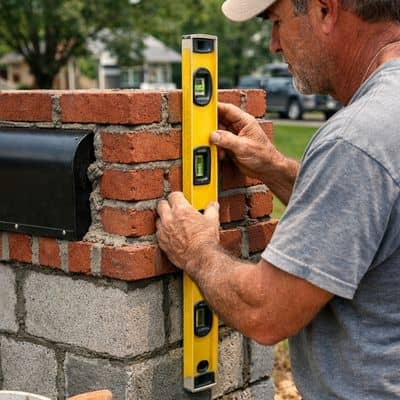
Mason using a level while building a brick mailbox to ensure proper alignment and long-term durability

Both brick and stone masonry mailboxes last 50 years or more when properly built. The material itself is not what fails. What fails is a weak foundation, poor mortar quality, or no sealing.

The most common cause of premature masonry mailbox failure is a shallow or undersized concrete footing. Without a proper footer, the column shifts and leans over time, particularly in Alabama’s clay-heavy soil. A skilled mason pours the footer deep enough to prevent movement regardless of seasonal ground shifts.

Brick has a slight edge in impact resistance, but not because it is harder. It is simply easier to repair. If a car hits a brick mailbox, a mason can source matching replacement bricks with relative ease. With natural stone, matching the color, texture, and profile of irregular fieldstone or regional limestone is harder and sometimes impossible without visible patching.

Curb Appeal: Which One Looks Better?

Neither material is objectively better looking. The right choice depends entirely on your home’s existing exterior.

A brick mailbox looks best when:

  • Your home has a brick exterior
  • The architecture is traditional, Colonial, Craftsman, or ranch-style
  • The landscaping is manicured and symmetrical
  • You want a classic, uniform look that blends with the neighborhood

A stone mailbox looks best when:

  • Your home has a stone or mixed-material exterior
  • The architecture is farmhouse, Tudor, contemporary, or rustic
  • The landscaping is natural or cottage-style
  • You want a distinctive, upscale entry point that stands apart from the street

The best rule is simple: match your mailbox to your home’s dominant exterior material. A brick house with a stone mailbox can work if the colors and tones are compatible, but a mason’s eye for proportion and material harmony makes all the difference. In a comparable case study from Connecticut, a home with a brick masonry mailbox sold for $4,500 more than an identical neighboring property with a standard metal mailbox.

Maintenance: What to Expect After Installation

Both options require very little maintenance compared to wood or metal mailboxes, which may need full replacement within 10 to 15 years.

For brick mailboxes, annual inspection of mortar joints is enough to catch small cracks before water enters and causes damage. Reseal with a penetrating masonry sealer every three to five years. Tuckpointing, the process of refilling worn mortar joints, is typically needed every 10 to 20 years.

For stone mailboxes, natural stone requires more frequent sealing, especially in Huntsville’s humid climate. Limestone and flagstone are porous and absorb moisture if left unsealed. Cultured stone is more forgiving and holds sealant more evenly.

One practical note: keep grass, mulch, and vegetation away from the base of any masonry mailbox. Moisture trapped at ground level is one of the most common causes of mortar deterioration.

Which Is Right for Your Home?

If your home has a brick exterior, a custom brick mailbox built to match your existing brickwork is the strongest choice. It creates a cohesive, polished look from the street and signals that your property has been thoughtfully maintained.

If your home has a stone exterior, mixed materials, or contemporary architecture, a stone mailbox completes the picture in a way that brick simply cannot.

When in doubt, call a local masonry professional before committing. A mason who works with both materials can assess your home’s exterior, suggest the right stone or brick type, and give you an honest recommendation based on what they see rather than what looks good on paper.

Posted in Masonry | Tagged brick mailbox

Post navigation

← Older posts

Leave a Review on Google

Leave a Google Review

Leave a Review on YELP

Leave a Yelp Review

Leave a Review on Facebook

Leave a Review on Facebook

CONTACT US

© Copyright 2021 Huntsville Brick & Stone
​​​​Huntsville, Alabama ​35803
Phone: (256) 804-0025

Privacy Policy | Terms of Use

Web Development and SEO by:
Southern SEO

↑