
↓
 

Huntsville Brick Stone

Brick & Stone Masons in Huntsville, AL

Huntsville Brick Stone
  • Home
  • Brick Masonry
  • Stone Masonry
  • Indoor Fireplaces
  • Outdoor Fireplaces
  • Custom Tile Showers
  • Retaining Walls
  • Gallery
Home→Tags brick mailbox

Tag Archives: brick mailbox

Masonry Mailbox Design for Driveways With a Center Island

Huntsville Brick Stone Posted on September 25, 2026 by HuntsvilleBSSeptember 16, 2026
Brick and stone masonry mailbox beside a landscaped driveway center island in Huntsville

A center island is a great spot for a masonry mailbox. It sits front and center, so the design has to earn that attention. Place it wrong, and cars struggle to reach the mail or swing around the island. Build it too big, and the whole entrance feels cramped. Get the plan right first, and you end up with a feature that looks sharp and works every day.

A masonry mailbox is a mailbox built from brick, stone, or block instead of a metal post. It is heavy, permanent, and built to last. That permanence is the reason planning matters so much. You cannot nudge it over after the mortar sets.

A Mailbox Location That Fits the Driveway Layout

A center island changes everything about mailbox placement. The island is the planted or paved space in the middle of a circular or split driveway. Cars flow around it, so the mailbox has to fit that flow.

Start by picturing how vehicles move. On a circular drive, traffic curves around the island in one direction. The mailbox should face the approach, where a driver can reach it from the car. Placing it on the wrong side means backing up or getting out.

The mailbox also needs to sit clear of the driving path. Set it too close to the edge, and cars may clip it. Set it dead center of a small island, and it can block sight lines. The right spot balances easy reach with safe clearance.

Consider these placement points early:

  • The direction cars travel around the island
  • The side a driver can reach without leaving the car
  • Clearance from the driving edge to avoid clipping
  • Sight lines so the mailbox does not block views

In many newer Huntsville neighborhoods, circular drives and center islands are common at larger homes. A masonry mailbox suits these entrances well. The key is matching the location to how the drive actually works.

Turning Space Around a Built-In Mailbox

A mailbox on an island shares space with moving cars. Turning space is the room a vehicle needs to approach, pause, and pull away. Too little of it makes the mailbox a daily hassle.

Driveway width drives this. A narrow lane around the island leaves little room to stop for mail. A wider lane lets a car pause without blocking others. Measure the space you have before you settle on a mailbox size.

The mailbox footprint matters too. A large masonry base eats into the island and narrows the drive around it. A slimmer structure leaves more turning room. The design should fit the island without pinching the path.

Think about delivery vehicles as well. A mail carrier needs to reach the box from their vehicle. On a center island, they follow the same curved path your cars do. Enough turning space keeps delivery smooth for them too.

A crowded island frustrates everyone who uses it. Plan the turning space first, then size the mailbox to fit. That order prevents an awkward, tight entrance later.

Stone and Brick Details for a Freestanding Structure

A masonry mailbox on an island is a freestanding structure. Freestanding means it stands alone, not attached to a wall or house. It is seen from every side, so the details show. That makes proportion and finish important.

Proportion is the balance of height, width, and depth. A mailbox that is too tall looks like a tower on a small island. One squat looks like a lump. The right proportion suits the island size and the home behind it. A skilled mason plans this balance first.

Materials set the style. Brick gives a clean, classic look. Stone reads more rustic and solid. Many homeowners match the mailbox to the house or a front wall. Matching the material and color ties the entrance together.

Caps and trim finish the piece. A cap is the top stone or cap unit that crowns the structure. It sheds water and gives a clean edge. Trim details around the mailbox door add polish. These touches make a freestanding mailbox look built, not bolted together.

Keep the scale in check on a center island. A heavy structure can overwhelm a small space. A well-proportioned mailbox feels substantial without crowding the island. That balance is the mark of a good design.

Drainage and Landscaping Around the Island

An island collects water, and a masonry mailbox sits right in it. Drainage protects both the structure and the plants around it. Ignore it, and you invite settling, cracks, and soggy beds.

Grade is the slope of the ground. Water should flow away from the mailbox base, not pool against it. A low island that traps water can soften the soil under the foundation. In Huntsville’s heavy rains, standing water is a real concern. Good grading keeps the base solid.

The foundation needs firm, well-drained ground. A masonry mailbox is heavy, and wet soil can shift. A proper footing spreads the weight and resists movement. A footing is a solid support below the structure. Paired with drainage, it keeps the mailbox from tilting over time.

Landscaping softens and frames the mailbox. Planting beds, edging, and low plants dress up the island. But plants need water managed well too. Keep beds from holding water against the masonry.

A few landscaping tips help:

  • Slope the island so water drains away from the base
  • Use edging to separate beds from the driving edge
  • Choose low plants that will not block the mailbox
  • Keep mulch and soil from piling against the brick

The right mix of drainage and planting keeps the mailbox stable and good-looking. Both should be planned with the structure, not added as an afterthought.

Mailbox Access for Residents and Delivery Drivers

A mailbox exists to hold mail, so access comes first. The finished masonry has to stay easy to use for you and the carrier. A beautiful mailbox that is hard to reach is a failed design.

Height and reach matter. The mailbox opening should sit at a level a driver can reach from a car window. Too high or too low forces people to stretch or stoop. Standard delivery heights guide this, and they can vary by carrier and area. Confirm the right height before building.

The approach must stay clear. A driver, resident or carrier, needs a straight, open reach to the box. Plants, the cap, or trim should never block the door. Test the reach during planning, not after the mortar dries.

Consider the mail carrier’s routine too. Delivery works best when the box faces the direction of travel around the island. The carrier can pull up, deliver, and move on. A mailbox facing the wrong way slows them down and may cause missed mail.

Placement rules can apply as well. Some areas set standards for mailbox height, location, and distance from the road. These can vary by neighborhood, delivery route, and local rules. Check the requirements before you build so your finished mailbox meets them.

A masonry mailbox on a center island can be the highlight of your entrance. It greets every visitor and holds up for decades. Our local team knows Huntsville homes, driveways, and the ground beneath them. Reach out when you are ready to plan a mailbox that fits your drive and your home.
Posted in Masonry | Tagged brick mailbox, Stone Mailbox

Brick or Stone Mailbox? A Mason Weighs In

Huntsville Brick Stone Posted on May 29, 2026 by HuntsvilleBSMay 29, 2026
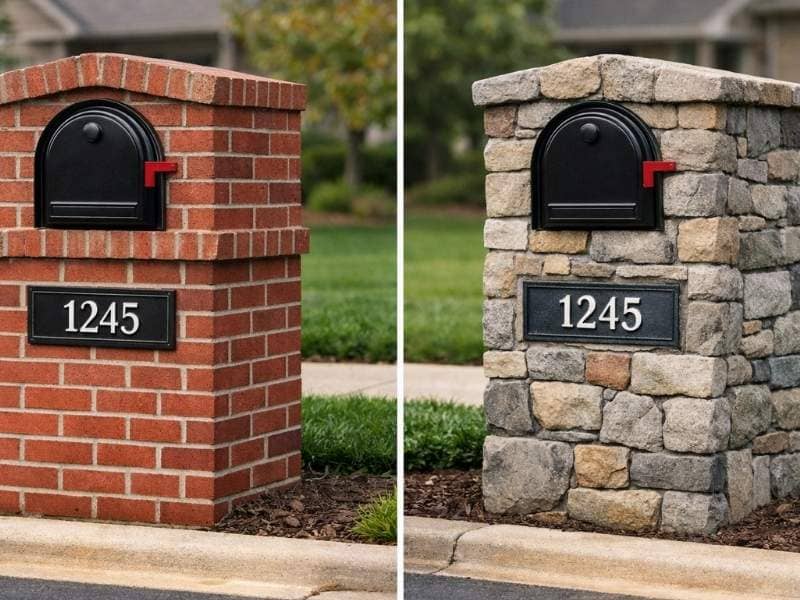
Brick and stone mailbox comparison showing two masonry mailbox styles in front of residential homes

Your mailbox is the first thing people notice when they pull up to your home. It sits at the edge of your property, setting the tone for everything behind it. Most homeowners ignore it until something goes wrong: a car clips it, the mortar starts crumbling, or a neighbor’s new masonry mailbox makes the old metal post look embarrassing.

If you are thinking about upgrading to a masonry mailbox, the first decision is material. Brick and stone are both excellent choices. They are durable, permanent, and far more attractive than anything made from wood or metal. But they are not the same, and the right choice depends on your home.

According to the National Association of Realtors, 99% of real estate agents believe curb appeal attracts strong buyers, and exterior improvements can generate roughly a 238% return on investment. A masonry mailbox is one of the simplest upgrades you can make to capture that return.

What Is a Brick Mailbox?

A brick mailbox is a permanent masonry structure built from fired clay bricks and mortar, set on a poured concrete footing. A mason lays each brick in courses, fills the joints with mortar, and installs a metal insert to hold the mail. The finished column can also include planters, address plaques, lighting, and newspaper slots.

Brick mailboxes come in two main formats. A custom-built mailbox is constructed on-site by a brick mason who matches your home’s existing brick color, size, and mortar joint style. A pre-built mailbox is a factory-produced unit that gets delivered and installed on a new concrete pad. Custom builds cost more but look more intentional and cohesive with the home.

Average installed cost:

  • Pre-built brick mailbox: $600 to $1,200
  • Custom brick mailbox: $700 to $1,500
  • Mason labor: $55 to $125 per hour
  • Permit fees (where required): $45 to $145

What Is a Stone Mailbox?

A stone mailbox is built using the same process as a brick mailbox, with a concrete footing and mortar, but the surface material is natural or manufactured stone. The type of stone you choose changes the look, the price, and how much maintenance the mailbox will need over time.

Common stone types used in Huntsville area mailboxes include:

  • Fieldstone: Irregular natural stones with a rustic, organic look
  • Flagstone: Flat-cut slabs with a clean, structured appearance
  • Limestone: Smooth and light-colored, a traditional choice for Southern homes
  • Cultured stone: Man-made veneer with consistent sizing, lower cost, and high customizability
  • Stacked stone veneer: A modern, architectural look that suits contemporary builds

Natural flagstone and fieldstone mailboxes carry the highest material costs among all stone mailbox types. Cultured stone brings the price closer to brick while still delivering a high-end appearance.

Average installed cost:

  • Stone mailbox (pre-built or cultured stone): $600 to $1,500
  • Custom natural stone mailbox: $900 to $1,900

Cost: Are They Really That Different?

On paper, the price ranges overlap almost completely. In practice, natural stone mailboxes tend to run $100 to $400 more than a comparable brick build. That difference comes from material sourcing and the extra time a stone mason spends cutting and fitting irregular stone profiles.

If budget predictability matters to you, brick is the safer choice. The cost is more consistent across quotes because standard clay brick is widely available, easy to price, and straightforward to install.

Both materials require a concrete footing, which is typically included in the quote. You should also budget for extras like a quality mailbox insert ($18 to $200), address numbers ($50 to $300), and optional lighting ($50 to $150).

Durability: Which One Lasts Longer?

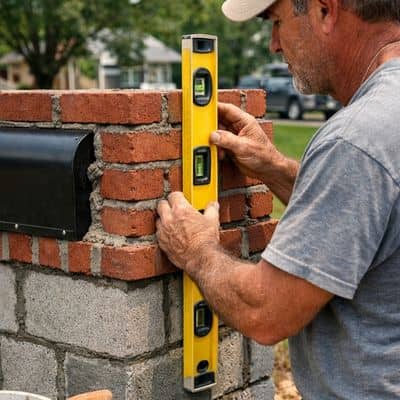
Mason using a level while building a brick mailbox to ensure proper alignment and long-term durability

Both brick and stone masonry mailboxes last 50 years or more when properly built. The material itself is not what fails. What fails is a weak foundation, poor mortar quality, or no sealing.

The most common cause of premature masonry mailbox failure is a shallow or undersized concrete footing. Without a proper footer, the column shifts and leans over time, particularly in Alabama’s clay-heavy soil. A skilled mason pours the footer deep enough to prevent movement regardless of seasonal ground shifts.

Brick has a slight edge in impact resistance, but not because it is harder. It is simply easier to repair. If a car hits a brick mailbox, a mason can source matching replacement bricks with relative ease. With natural stone, matching the color, texture, and profile of irregular fieldstone or regional limestone is harder and sometimes impossible without visible patching.

Curb Appeal: Which One Looks Better?

Neither material is objectively better looking. The right choice depends entirely on your home’s existing exterior.

A brick mailbox looks best when:

  • Your home has a brick exterior
  • The architecture is traditional, Colonial, Craftsman, or ranch-style
  • The landscaping is manicured and symmetrical
  • You want a classic, uniform look that blends with the neighborhood

A stone mailbox looks best when:

  • Your home has a stone or mixed-material exterior
  • The architecture is farmhouse, Tudor, contemporary, or rustic
  • The landscaping is natural or cottage-style
  • You want a distinctive, upscale entry point that stands apart from the street

The best rule is simple: match your mailbox to your home’s dominant exterior material. A brick house with a stone mailbox can work if the colors and tones are compatible, but a mason’s eye for proportion and material harmony makes all the difference. In a comparable case study from Connecticut, a home with a brick masonry mailbox sold for $4,500 more than an identical neighboring property with a standard metal mailbox.

Maintenance: What to Expect After Installation

Both options require very little maintenance compared to wood or metal mailboxes, which may need full replacement within 10 to 15 years.

For brick mailboxes, annual inspection of mortar joints is enough to catch small cracks before water enters and causes damage. Reseal with a penetrating masonry sealer every three to five years. Tuckpointing, the process of refilling worn mortar joints, is typically needed every 10 to 20 years.

For stone mailboxes, natural stone requires more frequent sealing, especially in Huntsville’s humid climate. Limestone and flagstone are porous and absorb moisture if left unsealed. Cultured stone is more forgiving and holds sealant more evenly.

One practical note: keep grass, mulch, and vegetation away from the base of any masonry mailbox. Moisture trapped at ground level is one of the most common causes of mortar deterioration.

Which Is Right for Your Home?

If your home has a brick exterior, a custom brick mailbox built to match your existing brickwork is the strongest choice. It creates a cohesive, polished look from the street and signals that your property has been thoughtfully maintained.

If your home has a stone exterior, mixed materials, or contemporary architecture, a stone mailbox completes the picture in a way that brick simply cannot.

When in doubt, call a local masonry professional before committing. A mason who works with both materials can assess your home’s exterior, suggest the right stone or brick type, and give you an honest recommendation based on what they see rather than what looks good on paper.

Posted in Masonry | Tagged brick mailbox

Leave a Review on Google

Leave a Google Review

Leave a Review on YELP

Leave a Yelp Review

Leave a Review on Facebook

Leave a Review on Facebook

CONTACT US

© Copyright 2021 Huntsville Brick & Stone
​​​​Huntsville, Alabama ​35803
Phone: (256) 804-0025

Privacy Policy | Terms of Use

Web Development and SEO by:
Southern SEO

↑