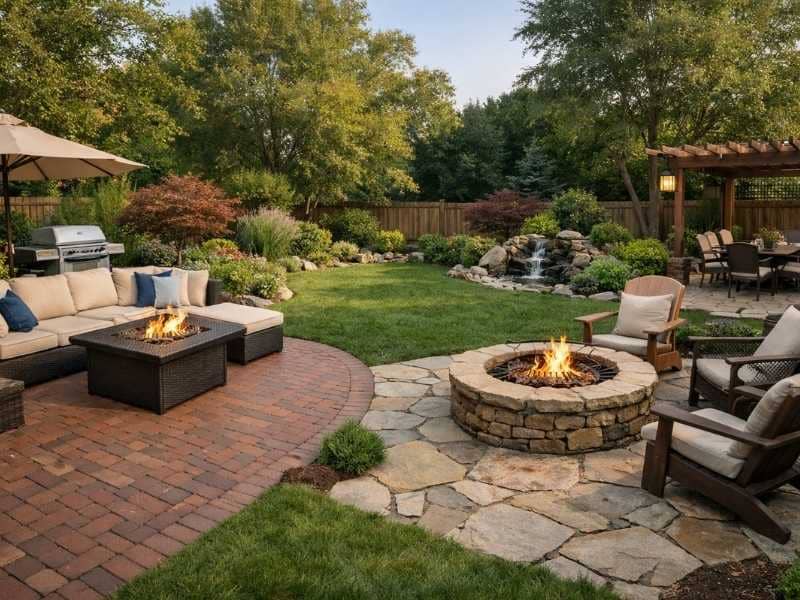
If you are planning a new patio, the choice between brick and stone will shape how your backyard looks, how much you spend, and how long it holds up. Both are excellent masonry materials, but they are not the same. The right pick depends on your budget, your home’s style, and what you want from your outdoor space.
For most homeowners, brick pavers are the more budget-friendly and uniform choice. Natural stone pavers cost more upfront but last longer and tend to add more value at resale. The best option depends on your priorities: cost and consistency, or longevity and a premium look.
How Much Does Each Type Cost?
Brick patio: Installation runs $14 to $28 per square foot on average. A standard 200 square foot brick patio costs between $2,800 and $5,600 fully installed, including materials, labor, and a proper gravel base.
Stone patio: Natural stone installation runs $16 to $35 per square foot. That same 200 square foot patio in natural stone costs between $3,200 and $7,000 installed. Granite and slate sit at the higher end of that range. Flagstone typically falls in the middle.
The price gap between brick and stone is not as wide as most people expect. The bigger cost driver for both is the base preparation, the size of the patio, and the complexity of the pattern. Simple running bond patterns cost less to install. Intricate designs with curves and custom cuts cost more because they take longer to set.
A proper gravel and sand base is not optional for either material. A well-built base prevents shifting, cracking, and drainage problems. Cutting corners on the foundation is the single most common reason patios fail early.
How Long Does Each One Last?
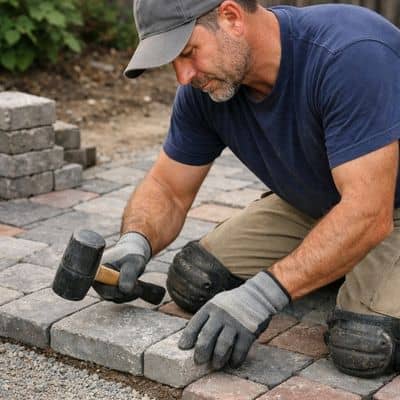
This is where the two materials start to pull apart.
Brick pavers last 30 to 50 years on average. Clay brick made from fired natural materials holds its color well over time because the color runs through the entire brick rather than sitting on the surface. With good maintenance, quality brick can last 100 years or more.
Natural stone pavers last 50 to 100 years or longer. Granite is especially hard and resists freeze-thaw damage better than most materials. Slate and bluestone also perform well in changing climates. Stone that has survived decades in nature will hold up on a patio with far less stress.
For comparison, poured concrete typically lasts 20 to 30 years before cracking and surface wear become serious issues. Both brick and stone outlast concrete by a wide margin.
Which One Needs More Maintenance?
Neither brick nor stone is high maintenance. But they do have different upkeep needs.
Brick patios need sealing every one to three years to protect against moisture and staining. Moss and weeds can grow between joints if the patio is in a shaded area, so periodic cleaning helps. Individual bricks can chip or crack over time, but the repair is straightforward. A mason can pull out a single brick and replace it without disturbing the rest of the patio.
Stone patios need sealing roughly once a year, depending on the stone type. Granite needs less frequent attention. Softer stones like sandstone need more. The joints between irregular stone pieces can attract weeds in wet climates, so checking them seasonally is a good habit. Like brick, individual stones can be replaced if damage occurs.
Both materials are easier to repair than poured concrete, where a crack often means resurfacing or replacing a large section.
Which One Looks Better With Your Home?
Neither material looks better in an absolute sense. It comes down to the style of your home and what fits naturally.
Brick pavers suit traditional, colonial, and craftsman-style homes well. The uniform shape and warm red or brown tones complement classic architecture. Brick also ties in naturally with homes that already have brick siding or a brick fireplace.
Natural stone pavers work well with a wider range of styles, from rustic to modern. Flagstone and bluestone are especially versatile. If your home has a stone exterior or you are building a patio alongside a stone retaining wall or stone fireplace, natural stone creates a cohesive, connected look throughout your outdoor space.
Which One Adds More Value to Your Home?
Both materials add measurable value, but stone tends to command a higher premium at resale. Industry data shows stone patios typically offer a return on investment of 70 to 80 percent. Brick patios deliver a solid 50 to 70 percent ROI.
Stone edges ahead because buyers see it as a permanent, high-end feature. Brick is attractive and durable, but natural stone signals a higher level of craftsmanship that tends to show up in appraisals.
That said, a well-built brick patio with clean joints and good borders still adds meaningful curb appeal. If your budget favors brick, it is a smart investment.
What a Mason Recommends
After years of installing both, here is the honest take: choose stone if your budget allows it and you want the patio to outlast the rest of your backyard. Choose brick if you want a classic look with dependable durability at a lower starting cost.
Either way, the material matters less than the installation. The quality of the base, the mortar, and the drainage underneath is what separates a patio that lasts from one that shifts and cracks within a few years.