↓
 

Huntsville Brick Stone

Brick & Stone Masons in Huntsville, AL

Huntsville Brick Stone
  • Home
  • Brick Masonry
  • Stone Masonry
  • Indoor Fireplaces
  • Outdoor Fireplaces
  • Custom Tile Showers
  • Retaining Walls
  • Gallery
Home→Categories Brick Mason

Category Archives: Brick Mason

Why Brick Masonry Fails Faster on Homes With Poor Drainage

Huntsville Brick Stone Posted on June 24, 2026 by HuntsvilleBSJune 24, 2026
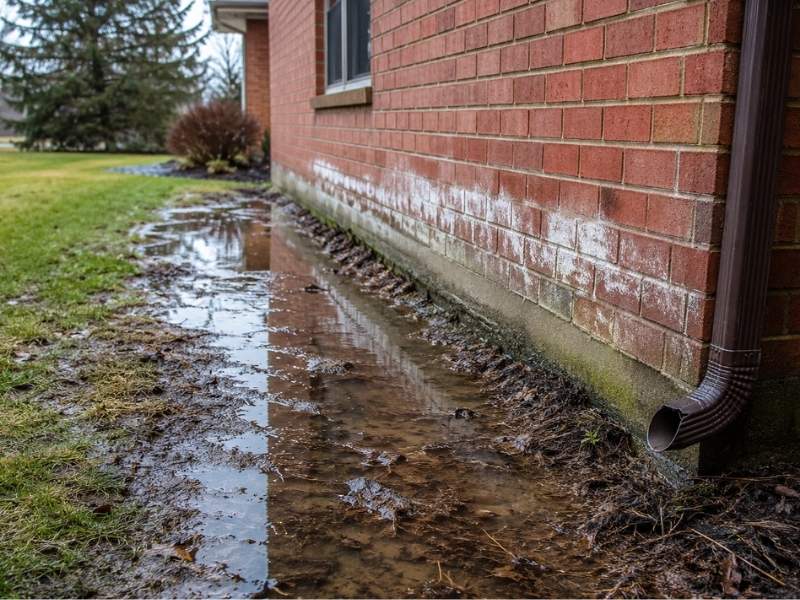
Brick masonry wall beside a home showing moisture staining and water pooling caused by poor drainage near the foundation

Brick has a reputation as the material you install once and forget. It’s supposed to last a hundred years with no fuss. On a lot that drains badly, brick masonry can start breaking down in a fraction of that time. Ground moisture climbs up from the wet soil, a problem known as rising damp in brick walls, and the bottom of the wall never gets to dry out. The brick didn’t change. The water around it did. For developers, the lesson is simple. The grading and drainage you set during site work decide how fast the brick on top of it wears out. 

What Actually Makes Brick Fail Faster

Brick takes on water and dries out again. That’s normal. Good brick handles that wet-and-dry rhythm for decades.

The problem starts when the brick never gets to dry. Poor drainage keeps the soil at the base of the wall soaked. Water sits there, and the brick stays wet most of the time. Now every damage event hits a wall that’s already saturated, with no time to recover between hits. That’s the real reason drainage decides the timeline. The damage comes from moisture that sits and never drains away.

How Ground Water Climbs Into the Wall

Brick is full of tiny pores. When the soil at the base stays wet, those pores pull water upward, the same way a paper towel pulls up a spill. Masons call this rising damp. The wetter the ground, the higher the water climbs.

This is why flashing and weep holes near the base matter so much. The Brick Industry Association says base flashing and weeps should sit no more than 10 inches above the finished ground. That detail blocks ground water from wicking up into the wall. On a wet lot with no break, the water just keeps rising and the lower courses stay soaked.

Why Constant Moisture Speeds the Damage

A wall that stays wet fails in three ways at the same time. Each one feeds the next. Together they shorten the wall’s life faster than any single problem would.

Salt builds pressure inside the brick

Ground water carries dissolved salts. As that water moves through the brick and dries near the surface, the salts crystallize. Those crystals grow and push outward. The pressure cracks the face of the brick and flakes pieces off. You see the white stains first, but the real harm is the force building inside.

Freeze and thaw hit a soaked wall harder

When wet brick freezes, the water inside expands and pries the surface apart. Brick that dried out would shrug this off. Brick held wet by bad drainage can’t. The more soaked the wall, the more likely it cracks and spalls each time the temperature drops. That’s why builders in colder zones spec severe-weather grade brick rated to freeze while wet.

Mortar joints wear out early

Mortar is the sacrificial part of a wall. It wears out before the brick does, on purpose. Constant moisture softens and erodes those joints fast. Once the joints open up, even more water gets in, and the whole wall declines quicker.

The Drainage Choices That Set the Clock

This is the part developers control. Every mechanism above runs on standing water near the base. Move the water and you slow all of it down at once.

  • Grade the lot so the ground falls at least 6 inches over the first 10 feet away from the foundation. The IRC requires this for a reason.
  • Slope driveways, walks and patios within 10 feet of the wall at least 2 percent away from the building.
  • On soil that holds water, install a foundation drain with gravel, filter fabric and a pipe that runs downhill at a quarter inch per foot.
  • Discharge that water well away from the base, never back toward it.
  • Keep base flashing and weeps no more than 10 inches above the final grade so ground moisture can’t wick up.

None of this is exotic. It’s ordinary site work done right the first time, before the brick ever goes up. Get it right once and the wall stops fighting water for the rest of its life.

Why This Lands on Builders, Not Buyers

Drainage failures are patient. The lot looks fine at closing. The brick looks perfect on move-in day. The spalling and stained joints show up two or three winters later, long after the buyer signed. By then it’s a callback, a warranty claim and a hit to your reputation.

Grading a lot right costs little during site work. Tearing out and replacing failed masonry costs a lot, and it always lands on whoever built it. The brick will outlast the mortgage if the water has somewhere to go. That’s a site decision, and it’s yours to make.

Frequently Asked Questions

Does poor drainage really make brick fail faster, or does it just look worse?

It does real structural harm. The stains are only the surface of it. Constant wetness lets salt pressure, frost and joint erosion grind on the wall with no break, and that steadily shortens how long it lasts.

How far should the ground slope away from a brick home?

The ground should drop at least 6 inches within the first 10 feet of the wall. Hard surfaces like driveways and patios near the home should slope at least 2 percent away. This pushes rain away from the base instead of letting it pool.

What is rising damp in a brick wall?

Rising damp is ground water creeping upward through brick from wet soil below. The pores in the brick act like a wick. It often shows up as a damp, stained band along the lower part of the wall.

Can good quality brick still fail on a wet lot?

Yes. Even high-grade brick wears out early when it can’t dry between soakings. A tougher brick buys time, but it can’t beat water that has nowhere to drain. On a wet lot, the drainage decides more than the brick spec does.

Does every home need a foundation drain?

No. Lots with sandy, fast-draining soil often shed water on their own. Soil that holds water, like clay-heavy ground, usually needs a drain to move water away from the footing before it can rise into the wall.
Posted in Brick Mason | Tagged Brick, Brick Masonry

Brick Paver Patterns That Create a Timeless Look

Huntsville Brick Stone Posted on June 18, 2026 by HuntsvilleBSJune 16, 2026
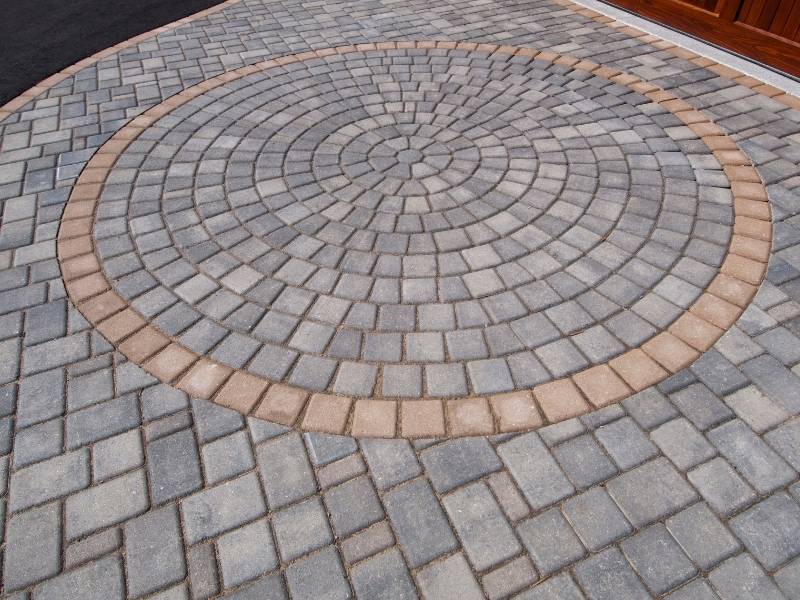
Circular brick paver pattern with contrasting borders creating a timeless look for a driveway or patio.

Most developers spend hours picking the right paver color. Then they pick a pattern in five minutes. That’s backwards.

The pattern is what people see. Color is secondary. Get the pattern wrong and the whole space feels off, no matter how expensive the material is.

Brick paver patterns that create a timeless look share one thing: they work with the geometry of the space, not against it. This article breaks down the top five patterns, when to use each one, and what drives up cost.

The Basics of Brick Paver Layout

Before picking a pattern, you need to know two things.

First, not all patterns work on all shapes. A herringbone looks great in a long rectangular path. It looks cluttered in a small, irregular courtyard.

Second, cut pieces cost money. Some patterns require a lot of cuts at the edges. Others don’t. That difference shows up in labor hours.

Pavers are typically laid on a compacted aggregate base with a sand setting bed. The base depth varies by load. Foot traffic needs less. Driveways need more. The pattern sits on top of this system. The base doesn’t change based on pattern, but the installation time does.

Brick Paver Patterns That Create a Timeless Look

Running Bond

This is the most common pattern. Each row offsets by half a brick. It’s the same layout used in standard brick walls.

Running bond works on almost any surface. Paths, patios, driveways. It’s simple to install, which keeps labor costs reasonable.

The visual effect is directional. It pulls the eye forward or across, depending on orientation. Use it to make a narrow space feel longer.

Herringbone

Herringbone is the strongest pattern structurally. The interlocking 45-degree or 90-degree angles distribute load across more contact points.

That’s why it’s the go-to for driveways and high-traffic areas. The pattern resists shifting over time better than most others.

Visually, it reads as active and detailed. It holds attention without feeling busy. A 45-degree herringbone on a diagonal to the house creates a sense of movement toward the entry.

Install time is higher. Cuts are frequent, especially at borders. Budget accordingly.

Basketweave

Two pavers laid horizontally, two laid vertically, repeating. It creates a woven texture that reads as classic and residential.

Basketweave suits patios and low-traffic areas well. It’s not the best choice for driveways because it lacks the interlocking strength of herringbone.

The look is soft. It pairs well with traditional architecture. If the building style is formal or colonial, basketweave fits without conflict.

Pinwheel

Four pavers arranged around a single center paver. The result is a square repeat with a lot of visual interest.

This pattern works best as an accent, not a field pattern across a large area. Use it in a courtyard center, around a feature, or as a border inset.

Full pinwheel across a large driveway gets visually noisy fast. Restraint here pays off.

Stacked Bond

All joints align in both directions. Rows stack perfectly on top of each other.

Stacked bond is the most modern-looking option on this list. It reads as clean and geometric. It suits contemporary and minimalist architecture well.

One warning: stacked bond is structurally weaker than running bond or herringbone. The aligned joints create continuous lines through the surface. Under shifting soil or heavy load, those lines crack first.

Use it on patios and decorative walks. Avoid it on driveways unless the base is very well prepared.

How Pattern Choice Affects Project Cost

Pattern complexity drives labor cost more than material cost.

Running bond is the cheapest to install. Fewer cuts, predictable layout.

Picking the Right Pattern for the Space

Match the pattern to the use case first. Then match it to the architecture.

Driveways: Herringbone at 45 or 90 degrees. The structural performance justifies the cost.

Pool decks and patios: Running bond or basketweave. Both drain well and hold up under foot traffic without the premium install cost.

Entry walks: Running bond oriented toward the door pulls visitors forward. Herringbone at 45 degrees adds formality.

Accent areas: Pinwheel. Keep it contained.

Modern architecture: Stacked bond on patios and decorative areas. Avoid on high-load surfaces.

Scale matters too. On large surfaces, a complex pattern can feel overwhelming. Simple patterns read better at scale. Complex patterns work well in smaller, defined areas where the detail has room to register.

Frequently Asked Questions

What brick paver pattern lasts the longest?

Herringbone is the most durable pattern for high-traffic surfaces. The interlocking angle distributes load across more pavers, reducing shifting and cracking over time. For driveways, it’s the standard recommendation among professional installers.

Which paver pattern is easiest to install?

Running bond is the simplest. It requires fewer cuts and follows a predictable layout. It’s the best starting point for residential patios and walkways where labor cost is a concern.

Can you mix paver patterns in one project?

Yes. A common approach is using running bond for the main field and adding a herringbone or pinwheel border. The key is using a soldier course (a single row of pavers laid perpendicular) as a transition between patterns.

Do paver patterns affect drainage?

The pattern itself doesn’t change drainage significantly. Joint width and base preparation matter more. Wider joints allow more water infiltration. Permeable paver systems use open graded bases specifically for stormwater management.

What paver pattern works best for a modern home?

Stacked bond suits modern and minimalist architecture. The aligned joints read as clean and deliberate. Pair it with large-format pavers in a light gray or charcoal tone for a sharp, contemporary look. Avoid stacked bond on driveways due to structural limitations.

Posted in Brick Mason | Tagged Brick

Welcome to Huntsville Brick & Stone

Huntsville Brick Stone Posted on July 27, 2017 by HuntsvilleBSMarch 11, 2026

Huntsville Brick & Stone specializes in stone masonry and brick masonry construction. Our expertise in masonry covers brickwork, block work, stonework, and all sorts of related products and applications. We serve the City of Huntsville, City of Madison, and all of Madison and Limestone Counties.

Bryon Conerly began working in construction at just 10 years old and became a skilled brick mason by the age of 14 — a trade passed down from his father and uncles, who moved from Tylertown, Mississippi to Huntsville in 1954. In 2009, he started his own company, applying the same values of hard work, integrity, and craftsmanship he was raised with. With a reputation for excellence, on-time delivery, and Grade A performance, Bryon brings decades of hands-on experience and pride to every project.

Call us at (256) 804-0025 to discuss your project.

What is Masonry Work?

Seamless Stone Masonry Stone WallsMasonry is building structures from individual units, which are often laid in and bound together by mortar. Common materials of masonry construction are brick, natural stone (such as marble, granite, travertine, and limestone,) cast stone, concrete block, stucco, tile, and glass block. Masonry is a highly durable form of construction.

The strength and durability of masonry are affected by the materials used, the quality of the mortar, the workmanship, and the pattern in which they are assembled. A person who constructs masonry is called a mason, a brick mason, stone mason, or bricklayer.

Applications of Masonry

brick wall - stone wall - landscapingMasonry is commonly used for walls and buildings, either inside or outside. Brick and concrete block are the most common types of masonry in use and may be either weight-bearing or a veneer.  Stone, both natural and man-made, is being used more and more for decorative features inside, outside and in backyards. Patios, outdoor kitchens, outdoor fireplaces, fire pits, decorative walls, decking, retaining walls, landscaping or hardscaping, and lots of other amenity applications are common place now. Natural stone masonry can provide very aesthetically pleasing projects.

Advantages of Brick or Stone in Building

  • Bricks and stone masonry increases the thermal mass of a building
  • Brick and stone masonry is non-combustible and provides fire protection
  • Brick and stone masonry walls are more resistant to projectiles, such as debris from hurricanes or tornadoes.
  • Brick and stone masonry weathers well and needs much less maintenance over time than other natural materials.
  • No painting is necessary for brick or stone. Color and finish selections are almost endless.
  • Brick and stone masonry typically lasts longer than wood products
  • Brick and stone masonry has higher compressive strength compared to wood and other natural products.
  • Brick and blockwork walls provide excellent sound insulation.
  • Stone does not warp, swell, bend, splinter, or dent.
  • Brick and stone are versatile in their aesthetic appeal and can work well with other construction materials.
  • Use of brick and stone signals a strong sense of permanence and longevity.

Call Bryon at Huntsville Brick & Stone at (256) 804-0025 for a quote on your brick or stone masonry project. Or, fill out the contact form to the right.

Posted in Block Mason, Brick, Brick Mason, Brick Walls, Masonry, Stone

Leave a Review on Google

Leave a Google Review

Leave a Review on YELP

Leave a Yelp Review

Leave a Review on Facebook

Leave a Review on Facebook

CONTACT US

© Copyright 2021 Huntsville Brick & Stone
​​​​Huntsville, Alabama ​35803
Phone: (256) 804-0025

Privacy Policy | Terms of Use

Web Development and SEO by:
Southern SEO

↑