↓
 

Huntsville Brick Stone

Brick & Stone Masons in Huntsville, AL

Huntsville Brick Stone
  • Home
  • Brick Masonry
  • Stone Masonry
  • Indoor Fireplaces
  • Outdoor Fireplaces
  • Custom Tile Showers
  • Retaining Walls
  • Gallery
Home→Tags Brick Masonry

Tag Archives: Brick Masonry

Painted Brick Problems Homeowners Should Know Before Painting

Huntsville Brick Stone Posted on July 8, 2026 by HuntsvilleBSJuly 3, 2026

Painted brick looks great in photos. It looks a lot less great five years later when the paint starts bubbling and nobody can figure out why. Brick is porous, and paint changes how it handles water, which causes problems most people don’t see coming until the damage is already done.

For developers flipping older properties or advising clients on exterior updates, this isn’t just a cosmetic call. It affects maintenance costs, resale conversations, and how long the brick underneath actually lasts.

Most modern coatings marketed as breathable exterior masonry finishes are designed to manage this issue, but many standard paints still fail to allow proper moisture movement through the brick surface.

How Paint Traps Moisture Inside Brick Over Time

Brick absorbs water. That’s normal. Untreated brick lets that water evaporate back out through the surface as conditions dry out.

Paint changes that. Most paints form a film that blocks water from moving through the brick the way it’s supposed to. Water gets in through small cracks, gaps, or the top of a wall, and then it’s stuck. It has nowhere to go.

Over time, trapped moisture causes:

  • Paint bubbling and peeling from the inside out
  • Mortar breakdown behind the painted surface
  • Freeze-thaw cracking in colder months, as trapped water expands

None of this shows up right away. It can take two to five years before the visible signs catch up to the damage happening underneath.

Why Brick Breathability Matters More Than Aesthetic Finish

Brick needs to release water vapor. That’s not a minor technical detail. It’s the whole reason unpainted brick lasts a century or more with basic upkeep.

When a wall can’t breathe, water pressure builds up behind whatever’s blocking it. This is true whether that block is paint, certain sealers, or non-permeable coatings.

What “Breathable” Actually Means

A coating with high vapor permeability lets water vapor pass through while still repelling liquid water from the outside. A low-permeability coating (most standard exterior paints) blocks both directions. That’s the core problem.

Mineral-based or silicate paints allow more vapor transfer than standard acrylic paint. They cost more upfront. They also don’t trap water the same way, which matters more than most homeowners realize when they’re picking a paint based on color swatches alone.

Hidden Surface Preparation Issues That Lead to Paint Failure

Bad prep work is behind most early paint failures on brick, not bad paint.

Common mistakes:

  • Painting over dirt, mildew, or efflorescence without cleaning it off first
  • Skipping a moisture test before painting (brick needs to be dry, not just dry-looking)
  • Using a sealer that isn’t compatible with the paint going over it
  • Painting brick that already has cracked or missing mortar joints

Each one of these creates a weak bond between the paint and the brick surface. Weak bonds fail early, usually within one or two seasons, and the failure gets blamed on the paint brand instead of the prep work that skipped a step.

How Painted Brick Alters Long-Term Maintenance and Repair Costs

Unpainted brick is close to maintenance-free for decades. Painted brick isn’t. Once brick is painted, it’s painted for good in practical terms. Removing paint from brick is expensive, slow, and risks damaging the brick face if it’s not done carefully.

That changes the math for property owners:

Maintenance TaskUnpainted BrickPainted Brick
Repainting cycleNot neededEvery 5-10 years
Repointing visibilityEasy to spot and matchHarder to match paint after repair
Moisture-related repair riskLowerHigher
Resale prep costMinimalRepainting or stripping often expected

Developers pricing out a renovation should treat painted brick as a recurring cost, not a one-time upgrade.

What Happens When Painted Brick Starts to Peel or Trap Efflorescence

Efflorescence is the white, chalky residue that forms when water moves through brick and leaves salt deposits on the surface. On unpainted brick, it’s usually harmless and can be brushed off.

On painted brick, it’s a different story. Salt deposits form underneath the paint film instead of on the surface. That buildup pushes against the paint from behind, which is a major reason painted brick peels in patches instead of wearing evenly.

Peeling paint paired with efflorescence usually means:

  • Water is actively moving through the wall
  • Salt is crystallizing and expanding behind the paint layer
  • The mortar or brick underneath may already have moisture damage

This combination is a sign to call a mason, not just a painter. A painter can strip and repaint the surface. Only a mason can tell you whether the wall itself needs repair first.

Frequently Asked Questions

Can painted brick be safely unpainted later?

Yes, but it requires specialized paint removal methods such as media blasting or chemical stripping. The process is slow, costly, and can damage brick if done incorrectly, so it is not a quick decision to reverse.

Does all paint trap moisture in brick the same way?

No. Standard acrylic paints block vapor transfer more than mineral or silicate-based paints, which allow the brick to breathe while still repelling surface water.

How do I know if brick is dry enough to paint?

A moisture meter test is more reliable than a visual check because brick can appear dry on the surface while still holding moisture inside. Testing after a stretch of dry weather improves accuracy.

Is efflorescence on painted brick a serious problem?

It can be. Efflorescence forming under paint usually means water is moving through the wall and salts are accumulating behind the paint film. This often leads to peeling and can indicate deeper moisture issues.

Does painting brick reduce its lifespan?

It can, mainly by trapping moisture that contributes to mortar breakdown and freeze-thaw cracking. Brick itself does not degrade from paint directly, but the moisture-related issues can shorten the wall’s practical lifespan.

Posted in Masonry | Tagged Brick, Brick Masonry

Why Brick Masonry Fails Faster on Homes With Poor Drainage

Huntsville Brick Stone Posted on June 24, 2026 by HuntsvilleBSJune 24, 2026
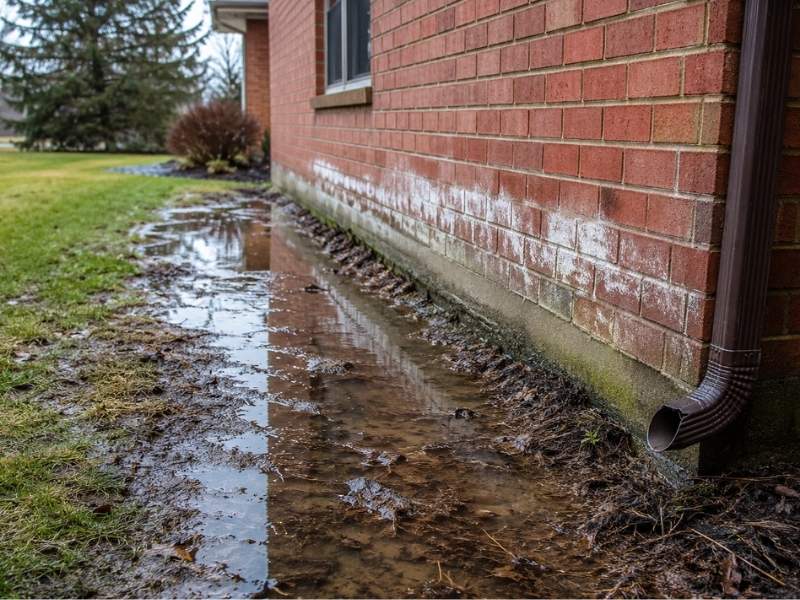
Brick masonry wall beside a home showing moisture staining and water pooling caused by poor drainage near the foundation

Brick has a reputation as the material you install once and forget. It’s supposed to last a hundred years with no fuss. On a lot that drains badly, brick masonry can start breaking down in a fraction of that time. Ground moisture climbs up from the wet soil, a problem known as rising damp in brick walls, and the bottom of the wall never gets to dry out. The brick didn’t change. The water around it did. For developers, the lesson is simple. The grading and drainage you set during site work decide how fast the brick on top of it wears out. 

What Actually Makes Brick Fail Faster

Brick takes on water and dries out again. That’s normal. Good brick handles that wet-and-dry rhythm for decades.

The problem starts when the brick never gets to dry. Poor drainage keeps the soil at the base of the wall soaked. Water sits there, and the brick stays wet most of the time. Now every damage event hits a wall that’s already saturated, with no time to recover between hits. That’s the real reason drainage decides the timeline. The damage comes from moisture that sits and never drains away.

How Ground Water Climbs Into the Wall

Brick is full of tiny pores. When the soil at the base stays wet, those pores pull water upward, the same way a paper towel pulls up a spill. Masons call this rising damp. The wetter the ground, the higher the water climbs.

This is why flashing and weep holes near the base matter so much. The Brick Industry Association says base flashing and weeps should sit no more than 10 inches above the finished ground. That detail blocks ground water from wicking up into the wall. On a wet lot with no break, the water just keeps rising and the lower courses stay soaked.

Why Constant Moisture Speeds the Damage

A wall that stays wet fails in three ways at the same time. Each one feeds the next. Together they shorten the wall’s life faster than any single problem would.

Salt builds pressure inside the brick

Ground water carries dissolved salts. As that water moves through the brick and dries near the surface, the salts crystallize. Those crystals grow and push outward. The pressure cracks the face of the brick and flakes pieces off. You see the white stains first, but the real harm is the force building inside.

Freeze and thaw hit a soaked wall harder

When wet brick freezes, the water inside expands and pries the surface apart. Brick that dried out would shrug this off. Brick held wet by bad drainage can’t. The more soaked the wall, the more likely it cracks and spalls each time the temperature drops. That’s why builders in colder zones spec severe-weather grade brick rated to freeze while wet.

Mortar joints wear out early

Mortar is the sacrificial part of a wall. It wears out before the brick does, on purpose. Constant moisture softens and erodes those joints fast. Once the joints open up, even more water gets in, and the whole wall declines quicker.

The Drainage Choices That Set the Clock

This is the part developers control. Every mechanism above runs on standing water near the base. Move the water and you slow all of it down at once.

  • Grade the lot so the ground falls at least 6 inches over the first 10 feet away from the foundation. The IRC requires this for a reason.
  • Slope driveways, walks and patios within 10 feet of the wall at least 2 percent away from the building.
  • On soil that holds water, install a foundation drain with gravel, filter fabric and a pipe that runs downhill at a quarter inch per foot.
  • Discharge that water well away from the base, never back toward it.
  • Keep base flashing and weeps no more than 10 inches above the final grade so ground moisture can’t wick up.

None of this is exotic. It’s ordinary site work done right the first time, before the brick ever goes up. Get it right once and the wall stops fighting water for the rest of its life.

Why This Lands on Builders, Not Buyers

Drainage failures are patient. The lot looks fine at closing. The brick looks perfect on move-in day. The spalling and stained joints show up two or three winters later, long after the buyer signed. By then it’s a callback, a warranty claim and a hit to your reputation.

Grading a lot right costs little during site work. Tearing out and replacing failed masonry costs a lot, and it always lands on whoever built it. The brick will outlast the mortgage if the water has somewhere to go. That’s a site decision, and it’s yours to make.

Frequently Asked Questions

Does poor drainage really make brick fail faster, or does it just look worse?

It does real structural harm. The stains are only the surface of it. Constant wetness lets salt pressure, frost and joint erosion grind on the wall with no break, and that steadily shortens how long it lasts.

How far should the ground slope away from a brick home?

The ground should drop at least 6 inches within the first 10 feet of the wall. Hard surfaces like driveways and patios near the home should slope at least 2 percent away. This pushes rain away from the base instead of letting it pool.

What is rising damp in a brick wall?

Rising damp is ground water creeping upward through brick from wet soil below. The pores in the brick act like a wick. It often shows up as a damp, stained band along the lower part of the wall.

Can good quality brick still fail on a wet lot?

Yes. Even high-grade brick wears out early when it can’t dry between soakings. A tougher brick buys time, but it can’t beat water that has nowhere to drain. On a wet lot, the drainage decides more than the brick spec does.

Does every home need a foundation drain?

No. Lots with sandy, fast-draining soil often shed water on their own. Soil that holds water, like clay-heavy ground, usually needs a drain to move water away from the footing before it can rise into the wall.

Posted in Brick Mason | Tagged Brick, Brick Masonry

Leave a Review on Google

Leave a Google Review

Leave a Review on YELP

Leave a Yelp Review

Leave a Review on Facebook

Leave a Review on Facebook

CONTACT US

© Copyright 2021 Huntsville Brick & Stone
​​​​Huntsville, Alabama ​35803
Phone: (256) 804-0025

Privacy Policy | Terms of Use

Web Development and SEO by:
Southern SEO

↑