↓
 

Huntsville Brick Stone

Brick & Stone Masons in Huntsville, AL

Huntsville Brick Stone
  • Home
  • Brick Masonry
  • Stone Masonry
  • Indoor Fireplaces
  • Outdoor Fireplaces
  • Custom Tile Showers
  • Retaining Walls
  • Gallery
Home→Tags Brick - Page 2 << 1 2

Tag Archives: Brick

Post navigation

Newer posts →

Signs Your Chimney Needs Masonry Repair 

Huntsville Brick Stone Posted on May 18, 2026 by HuntsvilleBSMay 13, 2026
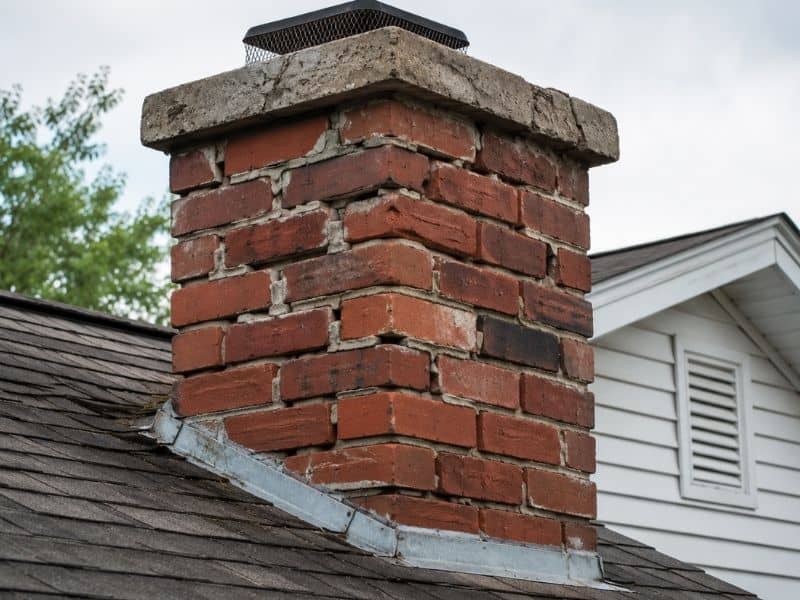
Damaged brick chimney with cracked mortar and visible wear on a residential roof showing early signs of chimney masonry repair

A chimney needs masonry repair when you see cracked or crumbling bricks, white stains on the exterior, mortar falling out, water leaking near the fireplace, or smoke coming back into your home. Catching these signs early saves thousands of dollars and prevents serious safety hazards.

Why Chimney Masonry Problems Are Easy to Miss

Most homeowners only look at their chimney from the ground. The real damage is usually happening higher up, where brick and mortar face the weather every single day. By the time you notice something inside your home, the problem has often been growing for months.

The good news is that chimneys give clear warning signs before a small repair turns into a full rebuild.

7 Signs Your Chimney Needs Masonry Repair

The most common warning signs are cracked bricks, crumbling mortar, white staining, water damage near the fireplace, spalling brick faces, a damaged crown, and a leaning chimney. Any one of these deserves a professional inspection.

1. Cracked or Crumbling Mortar

Mortar is the material between the bricks that holds everything together and keeps water out. When you see gaps, cracks, or loose powder between the bricks, the chimney needs repointing. Water gets into those gaps, freezes in winter, and forces them open even further. Minor repointing costs $150 to $500. Widespread failure can reach $2,200 or more.

2. White Stains on the Brick

Those white, chalky stains are called efflorescence. They appear when water moves through the brick and pulls minerals to the surface. Efflorescence is a sign that water is already getting inside the masonry and will cause bigger cracks over time if not addressed.

3. Spalling Bricks

Spalling is when the face of a brick chips or flakes off. You might find small pieces on your roof or in your yard. This happens when water soaks into the brick, freezes, and expands. Once bricks start spalling, they need to be replaced. Widespread spalling means the chimney is losing structural strength fast.

4. Water Leaks Near the Fireplace

If you notice water stains on the ceiling or walls near your fireplace, or water inside the firebox after rain, your chimney is letting moisture in. This could be a flashing problem, a cracked crown, or failed mortar. Water damage costs rise quickly the longer you wait.

5. A Damaged or Cracked Chimney Crown

The chimney crown is the concrete slab at the very top of the chimney. It keeps rain from falling into the flue. A cracked crown is one of the most common entry points for water and costs only $150 to $350 to fix, far less than the damage it prevents if ignored.

6. Smoke Coming Back Into Your Home

If smoke blows back into the room instead of going up the flue, something is blocking or disrupting the airflow. This can be caused by a cracked flue liner, debris buildup, or structural damage inside the chimney. This is a health and fire hazard. Cracked flue liners allow hot gases to escape into wall cavities and can start house fires. Flue liner repairs cost $625 to $7,000 depending on the damage.

7. A Leaning Chimney

A chimney that visibly leans or pulls away from the house is an emergency. This usually means the foundation has shifted or mortar has failed so badly the structure is unstable. Do not use your fireplace. Call a mason right away.

What Happens If You Ignore the Warning Signs

Small chimney problems grow fast. A $300 repair today can become a $5,000 job within a year or two if water keeps getting in. In the worst cases, a failing chimney can cause a house fire or structural collapse.

Here is a general cost breakdown by damage level:

Level of DamageTypical Repair Cost
Minor cracks, small mortar gaps$150 to $500
Tuckpointing or repointing a section$500 to $2,500
Crown repair$150 to $350
Flue liner repair or replacement$625 to $7,000
Partial chimney rebuild$1,500 to $4,000
Full chimney rebuild$3,100 to $15,400

A well-built brick chimney lasts 50 to 100 years. Mortar needs attention every 20 to 30 years. Staying on top of smaller repairs is what keeps the whole structure standing.

What a Chimney Masonry Inspection Covers
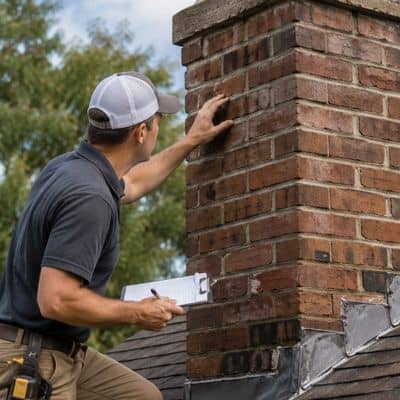
Mason inspecting a residential brick chimney during an inspection to check for masonry damage and repair needs

A professional chimney inspection covers the brick, mortar joints, crown, flashing, flue liner, and the area where the chimney meets the roof. It costs $130 to $380 and gives you a full picture of what needs repair now and what can wait.

A mason or chimney professional will typically check:

Interior walls and ceiling near the fireplace for water stains

All brick and mortar joints for cracks and gaps

The chimney crown for chips and water damage

The flashing where the chimney meets the roof

The flue liner for cracks or blockages

Can You Spot Chimney Damage From the Ground?

Yes, for some of it. Here is what to look for from your yard:

  • White staining on the brick exterior
  • Brick flakes or pieces on the roof or ground below
  • Visible gaps where mortar has fallen out
  • A cracked or uneven crown at the very top
  • Any lean or tilt in the chimney stack

For anything you cannot see clearly from the ground, a professional with a ladder or drone camera will give you a complete picture.

When to Repair vs. When to Rebuild

Repair is the right choice when damage is caught early. A full rebuild is needed when mortar has failed across the entire chimney, bricks are structurally compromised, or the chimney is leaning.

Repairs make sense when:

  • Damage is limited to a few bricks or a section of mortar
  • The crown has surface cracks but is still mostly intact
  • Water damage is recent

A rebuild may be needed when:

  • Large sections of brick are spalling or missing
  • The chimney leans or has pulled from the house
  • Repeated repairs have not stopped ongoing leaks

Frequently Asked Questions

How often should a chimney be inspected? 

The National Fire Protection Association recommends a chimney inspection once a year, even if you use the fireplace only occasionally.

Is chimney masonry repair covered by homeowners insurance? 

Most policies cover sudden damage from storms or fallen trees. They do not cover wear-and-tear or lack of maintenance. Check your policy before scheduling work.

How long does chimney masonry repair take?

Minor repairs like repointing or crown work usually take one to two days. A partial rebuild takes three to five days depending on chimney size.
Posted in Fireplace | Tagged Brick, chimney masonry repair, fireplace masonry

How to Know Which Brick Repair Your Home Needs 

Huntsville Brick Stone Posted on May 11, 2026 by HuntsvilleBSMay 8, 2026
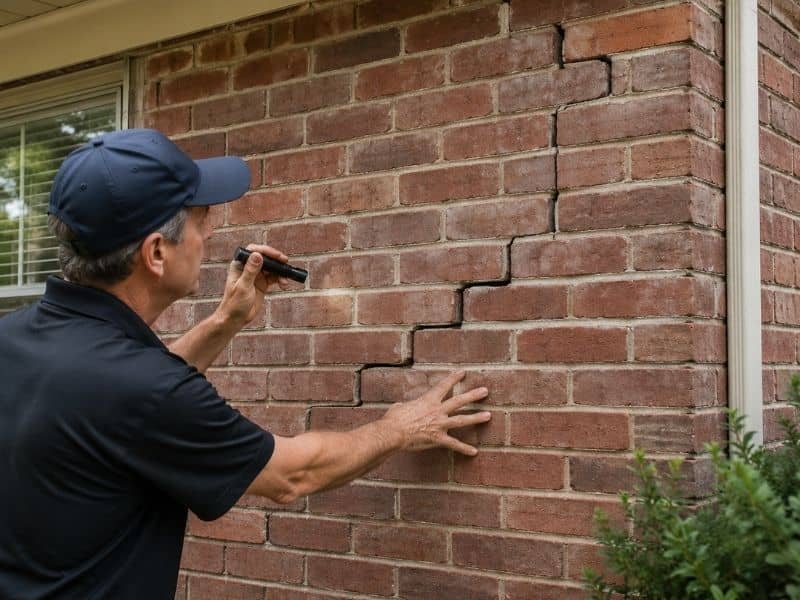
Contractor inspecting stair-step cracks and damaged mortar on a residential brick wall during a brick repair evaluation

Brick homes can last for generations. Still, even strong masonry starts showing wear over time. You may notice cracks near a chimney, loose mortar around steps, or bricks that look chipped and worn down.

At first, the damage may seem small. However, brick repair problems often grow faster than homeowners expect. Water enters tiny gaps. Soil shifts under the home. Then cracks begin spreading across the wall.

The hard part is knowing what type of repair you actually need.

Some homes only need repointing. Others need damaged bricks replaced. In more serious cases, the issue points to structural movement underneath the home.

Knowing the difference early can help you avoid larger and more expensive repairs later.

Signs Your Brick Repair Problem May Only Need Repointing

Repointing fixes damaged mortar between bricks when the brick itself still remains strong. Homes often need repointing after years of rain, moisture, and weather exposure. Early repointing helps stop water damage before cracks spread deeper into the wall or foundation.

Many brick problems begin with mortar damage, not the bricks themselves.

Mortar is the material between the bricks. Over time, heat, rain, and moisture slowly wear it down. Huntsville weather can speed up that process, especially during long wet periods and winter temperature swings.

In fact, properly maintained brick masonry can last more than 100 years. However, neglected mortar joints can fail much sooner.

What Damaged Mortar Looks Like

When mortar starts breaking apart, you may notice:

  • small gaps between bricks
  • sandy or powdery mortar
  • tiny cracks along joints
  • loose mortar near walls or steps

This is where repointing helps.

Repointing removes damaged mortar and replaces it with fresh mortar while keeping the original bricks in place. In many older neighborhoods, homes show mortar wear long before the brick itself fails.

That is why repointing often solves the issue early.

Still, timing matters.

If you wait too long, water can move behind the brick. Then the damage spreads deeper into the wall structure.

When Brick Replacement Makes More Sense

Brick replacement becomes necessary when bricks crack, flake, or break apart from long-term moisture damage. Replacing damaged bricks early helps prevent water intrusion, wall instability, and larger masonry repair costs around chimneys, steps, retaining walls, and exterior brick surfaces.

Sometimes the mortar is not the only problem.

Bricks can crack, chip, or break apart after years of moisture exposure. In some cases, the surface starts peeling or flaking. This issue is called spalling.

Brick damage often worsens during freeze-thaw cycles when trapped moisture expands inside masonry materials.

Signs Bricks Are Too Damaged to Save

You may notice:

  • bricks that look swollen
  • deep cracks across the face
  • corners breaking apart
  • brick surfaces peeling away

At that point, repointing alone will not solve the problem.

The damaged bricks need replacement.

Fortunately, many brick repair projects only require replacing a small section. A masonry contractor can remove damaged bricks while keeping the surrounding wall intact.

Common Areas Where Brick Replacement Happens

This type of damage often appears around:

  • chimneys
  • retaining walls
  • brick steps
  • mailbox columns
  • lower wall sections near drainage areas

Chimneys often show some of the earliest signs of masonry deterioration because they face constant exposure to rain, heat, and changing temperatures.

Replacing damaged bricks early helps prevent larger wall problems later.

Brick Cracks That May Point to Structural Problems

Some brick cracks signal structural movement underneath the home instead of surface masonry wear. Stair-step cracks, sticking doors, uneven floors, and separating brick corners often point to foundation shifting caused by moisture changes and soil movement around Huntsville properties.

Not every crack means the home is shifting. Still, certain crack patterns can signal a larger problem underneath the structure.

One common warning sign is a stair-step crack.

What Stair-Step Cracks Mean

These cracks move diagonally through the mortar joints and look like steps climbing up the wall. In many cases, they happen when part of the foundation settles unevenly.

You may also notice:

  • doors sticking
  • windows not closing properly
  • uneven floors
  • gaps near trim or ceilings
  • brick pulling away from corners

When several of these problems happen together, the issue may go beyond surface brick repair.

Why Soil Movement Affects Homes

Huntsville homes often deal with changing soil moisture levels throughout the year. Expansive clay soil can shift during wet and dry weather changes, which may contribute to stair-step cracking in brick walls.

As the soil moves, the brick above it reacts too.

In these situations, fixing the brick without fixing the movement usually leads to recurring cracks.

That is why structural inspections matter when damage keeps returning.

Why DIY Brick Repair Often Fails

DIY brick repair often fails because homeowners use the wrong mortar mix or only patch visible cracks. Improper repairs can trap moisture inside brick surfaces, cause recurring damage, and create uneven color matching that affects both appearance and long-term durability.

Many homeowners try quick brick repairs using hardware store mortar or sealants. Unfortunately, those repairs often create larger problems later.

Wrong Mortar Mix Problems

Older brick needs the correct mortar mix. If the mortar is too strong, it can trap moisture inside the brick. Then the brick begins cracking instead of the mortar joint.

This happens more often than people realize.

Why Surface Patching Does Not Last

Some homeowners fill visible cracks without checking where the moisture comes from. The crack may disappear temporarily, but water keeps moving behind the wall.

Later, the damage returns worse than before.

Why Color Matching Brick Is Difficult

Fresh mortar rarely matches older mortar right away. Brick color changes over time too. Without proper matching, repaired areas often stand out across the wall.

Professional brick repair focuses on both appearance and long-term durability.

What Masonry Contractors Look for During an Inspection

Masonry contractors inspect drainage, mortar condition, wall movement, chimney stability, and foundation signs before recommending brick repair. A full inspection helps determine whether the damage needs repointing, brick replacement, or structural repair to prevent recurring problems later.

A good masonry contractor does more than inspect the crack itself.

First, they check how water moves around the property. According to masonry industry studies, water intrusion remains one of the leading causes of long-term brick deterioration.

Poor drainage often causes brick damage near:

  • foundations
  • retaining walls
  • steps
  • mailbox columns

Next, contractors inspect the mortar condition. Crumbling joints usually point toward repointing needs.

Then they check for movement patterns.

For example, cracks near windows and doors may signal foundation shifting underneath the structure. Bulging walls or leaning chimneys can also point to deeper support issues.

The age of the home matters too.

Older homes may use softer brick and mortar materials. Those materials need careful repair methods to avoid additional damage.

A proper inspection helps separate cosmetic problems from structural concerns.

That way, homeowners avoid paying for the wrong repair.

Why Early Brick Repair Saves Money

Early brick repair helps stop moisture damage before it spreads deeper into walls and foundations. Small mortar cracks and loose bricks can quickly grow into expensive structural problems when water continues entering the masonry system over time.

Small brick problems rarely stay small forever.

A tiny mortar crack can slowly let water behind the wall. Over time, moisture weakens nearby bricks and spreads into surrounding areas.

Then repair costs rise.

The same thing happens with leaning mailbox columns or cracked brick steps. At first, the issue may look cosmetic. However, moisture and shifting often continue underneath the surface.

Early repairs help stop that cycle before larger structural work becomes necessary.

More importantly, early brick repair helps protect the appearance and value of the home.

Posted in Masonry | Tagged Brick

Post navigation

Newer posts →

Leave a Review on Google

Leave a Google Review

Leave a Review on YELP

Leave a Yelp Review

Leave a Review on Facebook

Leave a Review on Facebook

CONTACT US

© Copyright 2021 Huntsville Brick & Stone
​​​​Huntsville, Alabama ​35803
Phone: (256) 804-0025

Privacy Policy | Terms of Use

Web Development and SEO by:
Southern SEO

↑