↓
 

Huntsville Brick Stone

Brick & Stone Masons in Huntsville, AL

Huntsville Brick Stone
  • Home
  • Brick Masonry
  • Stone Masonry
  • Indoor Fireplaces
  • Outdoor Fireplaces
  • Custom Tile Showers
  • Retaining Walls
  • Gallery
Home→Tags brick repair

Tag Archives: brick repair

Loose Brick Above Garage Openings May Point to a Larger Support Issue

Huntsville Brick Stone Posted on July 24, 2026 by HuntsvilleBSJuly 16, 2026
Brick mason inspecting the brickwork above a residential garage door in Huntsville, AL for signs of lintel movement, loose masonry, and structural damage.

Brick repair often starts with something small. A loose brick above the garage door. Maybe a hairline crack nobody thought twice about. But the brick above a garage opening does not hold itself up. If it starts moving, something behind it already failed. While some issues can be resolved through brick restoration, problems involving the support system require a closer inspection before cosmetic repairs begin. This guide explains what is really going on above that opening and why ignoring it costs more the longer you wait.

The Brick Isn’t Holding Itself Up

Here is something a lot of homeowners do not know. Brick above a garage door is not stacked on top of itself all the way down like the rest of the wall. It cannot be. There is a wide opening underneath it.

Instead, that brick rests on a steel lintel or support angle. This is a horizontal steel bar hidden inside the wall, spanning the width of the garage opening. The brick veneer sits directly on top of it.

The lintel carries the full weight of every brick above the door. Not the studs. Not the header inside the garage. The steel.

When that lintel is solid, everything above it stays put for decades. When it is not, the brick has nothing left to lean on.

Why Garage Openings Are One of the Most Stressed Parts of a Brick Home

Garage openings take more abuse than almost any other spot on a brick exterior. A few reasons why.

The span is long. Most garage doors run 8 to 16 feet wide. That is a long stretch of steel holding up a heavy load with no support in the middle. Compare that to a window opening, which might only be 3 or 4 feet across.

Temperature swings hit this area hard. Steel expands in summer heat and contracts in winter cold. Over years, that constant movement puts stress on the metal and the brick sitting on it.

The door itself adds vibration. Every time the garage door opens or closes, it shakes the frame around it. Small vibrations, repeated thousands of times over the years, loosen mortar joints faster than people expect.

Put those three things together and you get one of the hardest working spots on the whole house.

Rusted Lintels Can Push Brick Outward

Steel rusts. That is not new information. But most people do not realize what rust actually does inside a wall.

When steel corrodes, it expands. Rust takes up more physical space than the solid steel it replaces. That expansion happens right underneath the brick.

As the lintel swells, it pushes upward against the mortar joint directly above it. That joint cracks first. Then the crack spreads outward and upward in a stair-step pattern, following the path of least resistance through the mortar lines.

Over time, this pressure shoves bricks slightly out of position. They no longer sit flush against their neighbors. That is the loose brick a homeowner eventually notices and calls someone about.

By the time you can see loose brick from the ground, the lintel underneath has usually been rusting for years.

The Warning Signs That Mean the Problem Is Growing

Loose brick gets attention because it is obvious. But it is rarely the first sign. A trained eye catches trouble long before a brick actually comes loose.

Watch for these signs around any garage opening:

  • Brick rows that sag slightly in the middle of the span, even by a small amount
  • Mortar joints that look wider than the joints elsewhere on the wall
  • Water stains or dark streaks on the brick right above the door
  • Trim boards or flashing pulling away from the brick
  • Cracks that keep coming back in the same spot even after a patch job

Any one of these on its own might not mean much. Two or more together, especially in the same area, usually means the support system behind the brick is already compromised.

Water stains deserve extra attention. They often mean the flashing above the lintel has failed, which lets moisture sit directly on the steel. Wet steel rusts faster. Faster rust means faster expansion. The cycle speeds itself up.

Why Replacing Loose Bricks Alone Rarely Solves the Problem

This is where a lot of repair jobs go wrong. Someone sees loose brick, pulls it out, resets it with fresh mortar, and calls it done.

That fixes what you can see. It does nothing for what caused it.

A brick mason who knows what they are doing checks the whole support system before touching a single brick. That means inspecting the lintel itself for rust and pitting. It means checking the flashing above the opening to confirm water is actually being directed away from the steel. It means looking at drainage paths behind the brick veneer, since trapped moisture is often the real root cause.

Only after confirming the support system is sound, or repairing it if it is not, does a proper rebuild of the damaged brick section make sense. Skip that step and the same cracks tend to return within a year or two, sometimes in the exact same spot.

Replacing brick without fixing the lintel is a patch, not a repair. It looks fine for a while. Then the same problem shows back up, usually worse than before.

Frequently Asked Questions

How do I know if the brick above my garage is loose because of a bad lintel?

Look for stair-step cracks running from the corners of the opening upward, along with a mortar joint that looks noticeably wider right above the door than the joints elsewhere. Those two signs together point strongly toward a lintel problem rather than a simple settling crack.

How long does a steel lintel typically last before it needs replacing?

It depends heavily on the flashing quality above it and how much moisture reaches the steel. A well protected lintel can last several decades. One exposed to constant moisture from failed flashing can start rusting significantly within 10 to 15 years.

Can I just caulk the cracks above my garage door instead of fixing the lintel?

Caulking hides a crack temporarily but does not stop the rust expansion causing it. The crack will most likely return, and the brick above it will continue shifting until the actual lintel is addressed.

Is loose brick above a garage door a safety concern?

Yes, it can be. Brick that has lost its support can eventually fall, especially after freeze and thaw cycles or added vibration. Any loose or visibly displaced brick above a garage opening should be inspected promptly rather than left alone.

Will homeowners insurance cover lintel and brick repair above a garage?

Coverage depends on the specific policy and the cause of the damage. Gradual wear from age and rust is often treated differently than sudden damage from a storm or impact, so it is worth checking directly with your insurance provider before assuming either way.

Posted in Brick Mason | Tagged Brick, Brick Masonry, brick repair

Brick Repair: How to Match Existing Masonry for Seamless Results

Huntsville Brick Stone Posted on July 17, 2026 by HuntsvilleBSJuly 10, 2026
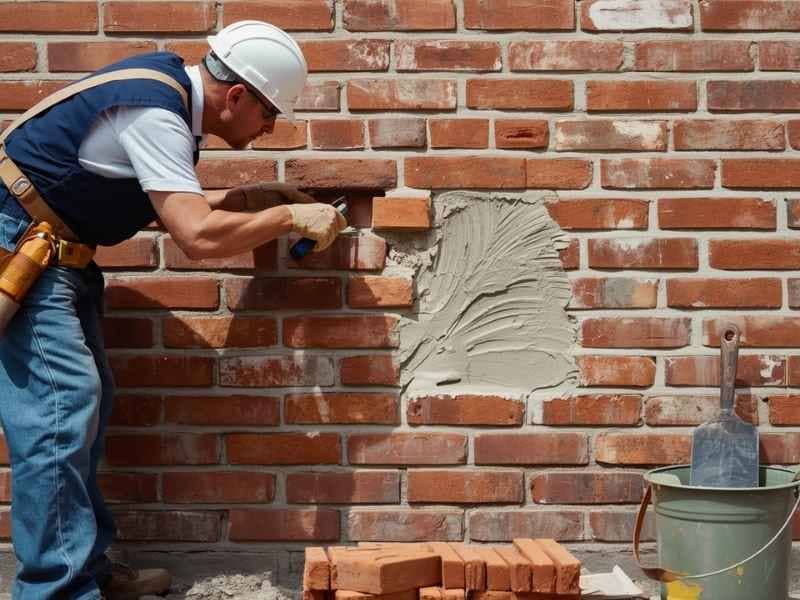
Brick repair by a mason matching replacement brick and mortar for seamless masonry results

Good brick repair should fix damage without making the repaired area stand out. The goal is to restore the wall so the new work blends with the old brick and mortar. When the right materials and methods are used, the repair can look natural and help the masonry stay strong for many years.

This is not always easy. Brick changes over time as it is exposed to rain, sun, dirt, and changing weather. Mortar can also fade, crack, or wear away. A skilled mason must look at the full wall before choosing replacement materials.

Matching brick and mortar takes care, patience, and experience. A repair that looks simple may require several steps to create a clean and even result.

Why Matching Existing Brick Is Essential for Seamless Repairs

Brick comes in many sizes, colors, shapes, and textures. Even two bricks made by the same company may not look exactly alike. Older bricks can be even harder to match because time changes its surface and color.

A mason first studies the brick around the damaged area. They look at the size, face texture, color range, and edge shape. They may also check how the brick reacts to light and moisture.

The new brick does not always need to be an exact match. In many cases, a close blend works better. Brick walls often have natural color changes, so the goal is to choose a replacement brick that fits within the same range.

Reclaimed brick may help with older buildings. This brick comes from past projects and may have the worn look needed to match existing masonry. New bricks can also work well if the right size, color, and finish are available.

A poor match can create a clear patch that draws attention. A careful match helps the repair blend into the wall and keeps the original look of the property.

How Masonry Professionals Match Mortar Color and Texture

Mortar makes up a large part of the wall’s appearance. Even when the brick match is good, the repair may still stand out if the mortar is the wrong color or shape.

Masons study the existing mortar before mixing new material. They check the color, grain, joint width, and joint style. Some mortar joints are smooth and flat. Others may be curved, recessed, or slightly rough.

The type of sand used in the mix can change the final color and texture. Cement, lime, and pigments can also affect the result. Masons may prepare small test samples before starting the full repair.

Fresh mortar often looks darker when it is wet. It becomes lighter as it dries and cures. This is why the final match cannot always be judged right away.

The strength of the mortar also matters. Mortar that is too hard may place stress on older bricks. Mortars that are too weak may fail too soon. A professional chooses a mix that supports the wall and works well with the existing materials.

Repair Techniques That Preserve the Original Look of Brickwork

Different types of damage require different repair methods. A mason should remove only the material that has failed whenever possible. This helps protect the original brickwork and reduces the size of the repair area.

Common repair methods include:

  • Replacing only cracked or broken bricks
  • Removing and replacing weak mortar joints
  • Matching the original joint shape and finish
  • Cleaning the repaired area with gentle methods
  • Blending replacement bricks across a small area when needed

Selective brick replacement works well when only a few bricks have failed. The mason removes the damaged units without harming the bricks around them. New bricks are then placed using matching mortar.

Tuckpointing repairs worn or cracked mortar joints. The old mortar is removed to a proper depth before new mortar is added. Simply placing new mortar over weak joints may create a short-term patch that fails again.

The final joint finish is also important. The mason shapes the new mortar to match the surrounding joints. This small detail can make a major difference in how well the repair blends.

Common Causes of Brick Damage That Require Professional Repair

Brick is strong, but several problems can damage it over time.

Moisture is one of the main causes. Water can enter cracks, gaps, or weak mortar joints. In cold weather, trapped water may freeze and expand. This can cause the brick face to crack, flake, or break apart.

Settlement can also lead to damage. Buildings may shift slightly as soil moves or settles. This can create stair-step cracks in mortar joints or larger cracks through the brick.

Impact damage may come from vehicles, tools, falling tree limbs, or lawn equipment. Even one damaged brick can allow water to reach the wall.

Old mortar can also wear away after years of exposure. Once joints become deep or loose, the wall may lose protection from water and weather.

Early repair often costs less than waiting. Small cracks and weak joints can spread if the cause is not fixed.

Maintaining Curb Appeal After Brick Repair Is Complete

Once the repair is done, basic care can help the masonry keep a clean and even look.

Property owners should check brick walls from time to time. Look for new cracks, loose mortar, stains, or areas that stay wet. Catching small problems early can help prevent larger repairs.

Gutters and downspouts should move water away from the wall. Poor drainage can cause water to collect near the base of the masonry.

Plants and vines should not grow directly against the brick. They may trap moisture and hide damage. Keeping plants trimmed also makes it easier to inspect the wall.

Avoid harsh cleaning methods. Strong chemicals and high-pressure washing can damage brick faces and mortar joints. A mason can suggest a safer cleaning method when stains appear.

Frequently Asked Questions

Can new bricks be matched to older brickwork?

Yes. A skilled mason can compare the size, color, texture, and finish of the existing brick. Reclaimed brick may work well for older walls, while new brick can often be blended into newer masonry.

Will repaired brick areas be noticeable?

A repair may look slightly different at first because the new mortar needs time to cure. With a good brick match, proper mortar color, and careful joint work, the area should blend more naturally over time.

How long does professional brick repair last?

A quality repair can last for many years. Its lifespan depends on the materials, workmanship, weather, and whether the original cause of the damage was fixed.

Is tuckpointing enough, or do bricks sometimes need replacement?

Tuckpointing is useful when the mortar has failed but the bricks are still strong. Cracked, loose, or badly damaged bricks usually need replacement.

How can I prevent future brick damage?

Keep water away from the wall, repair small cracks early, maintain gutters, and inspect the masonry often. Good drainage and quick repairs can reduce future damage.

Posted in Brick Mason | Tagged brick repair

Leave a Review on Google

Leave a Google Review

Leave a Review on YELP

Leave a Yelp Review

Leave a Review on Facebook

Leave a Review on Facebook

CONTACT US

© Copyright 2021 Huntsville Brick & Stone
​​​​Huntsville, Alabama ​35803
Phone: (256) 804-0025

Privacy Policy | Terms of Use

Web Development and SEO by:
Southern SEO

↑