↓
 

Huntsville Brick Stone

Brick & Stone Masons in Huntsville, AL

Huntsville Brick Stone
  • Home
  • Brick Masonry
  • Stone Masonry
  • Indoor Fireplaces
  • Outdoor Fireplaces
  • Custom Tile Showers
  • Retaining Walls
  • Gallery
Home→Categories Outdoor Fireplace

Category Archives: Outdoor Fireplace

A Stone Mason’s Honest Guide to Building an Outdoor Kitchen That Lasts

Huntsville Brick Stone Posted on June 1, 2026 by HuntsvilleBSMay 29, 2026
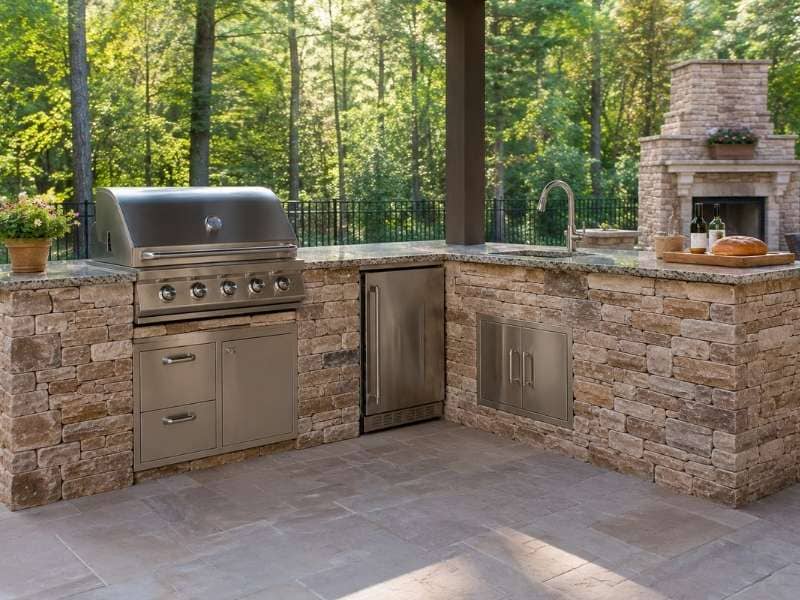
Custom stone outdoor kitchen with a built-in grill and countertop in a backyard patio setting

Building an outdoor kitchen is one of the best investments a homeowner can make. According to Grand View Research, the global outdoor kitchen market was valued at $26.35 billion in 2025 and is projected to reach $52.75 billion by 2033. More homeowners are adding outdoor cooking spaces every year, and it is easy to understand why. A well-built outdoor kitchen adds living space, lifts your home’s value, and gets used year after year.

But here is what most people find out too late: the material you choose determines everything. A poorly built outdoor kitchen can crack, rust, or fall apart within a few seasons. A well-built masonry kitchen can last 30 years or more.

We have seen both outcomes. 

What Makes a Stone or Brick Outdoor Kitchen Last?

A stone or brick outdoor kitchen holds up because masonry is non-combustible, weather-resistant, and structurally stable. Unlike prefab steel or modular kits, a properly built masonry kitchen will not rust, warp, or shift over time. With the right mortar, a solid base, and sealed countertops, it can last 30 years or more.

Why Masonry Outlasts Prefab Kits

Prefab outdoor kitchen kits are easy to understand at first glance. Prices start low, and they look finished right out of the box. But most are not built for long-term outdoor use. The frames rust after a few seasons. The finishes fade in the sun. The structures shift as the ground moves beneath them.

A custom masonry outdoor kitchen is built on a concrete block or steel frame, then finished with brick or stone veneer. It does not move, corrode, or deteriorate the way prefab units do. The upfront cost is higher, but you are not rebuilding it five years from now.

Getting the Base Right Before Anything Else

Before any stone or brick goes up, the foundation needs to be solid. The structure has to support the combined weight of stone countertops, appliances, and years of heavy use. Masons build outdoor kitchen frames using concrete masonry units, then apply mortar and veneer on top. This is the most important step in the entire build. It is also the step most DIY projects skip or get wrong.

The Best Stone and Brick Materials for an Outdoor Kitchen

Granite is the top choice for outdoor kitchen countertops. It handles direct heat from grills, resists UV fading, sheds moisture, and holds up to daily wear. For most granite types, sealing twice a year, once before summer and once before winter, keeps it performing well for decades.

Quartzite is the premium option. With a Mohs hardness rating of 7 or higher, quartzite is UV-stable, scratch-resistant, and handles heat from grills and direct sunlight without breaking down. Homeowners who want a high-end look with real long-term durability should take quartzite seriously.

For the base structure, natural stone veneer and brick veneer are both solid choices. Stone veneer gives the kitchen a natural, upscale look. Brick veneer is a classic option that pairs well with homes that already have brick on the exterior. In both cases, the veneer is applied over the concrete block frame using the correct outdoor mortar.

What to avoid outdoors: Marble, limestone, and travertine look beautiful inside but do not belong in an outdoor kitchen. All three are porous, sensitive to food and grease spills, and vulnerable to freeze-thaw damage. They will stain, etch, and crack over time.

Outdoor Kitchen Layouts Worth Considering

The L-Shape

The L-shape is the most popular layout because it gives you good counter space without taking over the patio. It works best in corner areas beside a fence, wall, or the back of the house. A built-in grill anchors one end, while prep space and a sink run along the other side.

The Freestanding Island

A freestanding brick or stone island is a good starting point for homeowners who want an outdoor kitchen but are not ready for a full build. A basic island includes a built-in grill, a stone countertop, and storage underneath. It stands on its own as a complete setup and can always be expanded later.

The Full Kitchen With a Stone Fireplace or Stone Hearth

For homeowners who want a true backyard living space, pairing an outdoor kitchen with a stone fireplace or stone hearth is worth the investment. The kitchen and fireplace can often share a structural wall, which keeps material and labor costs lower. The result is an outdoor room built for cooking, entertaining, and gathering in one connected space.

What Does a Stone or Brick Outdoor Kitchen Cost?

Industry data shows the national average for a professionally installed outdoor kitchen runs between $13,000 and $17,000, with most custom masonry builds landing between $10,000 and $35,000. According to Grand View Research, the U.S. outdoor kitchen market reached $9.7 billion in 2025 alone, reflecting how mainstream these projects have become.

Here is a general breakdown to help with planning:

Basic Build (grill island with brick or stone base, granite countertop): $7,000 to $16,000

Mid-Range Build (full L-shape kitchen, stone veneer, stone patio pavers, sink): $16,000 to $30,000

Premium Build (full outdoor kitchen, stone fireplace, stone pavers, covered structure): $30,000 to $60,000 or more

The return on that investment is strong. Industry estimates consistently place the ROI for outdoor kitchens between 55% and 200%, depending on material quality, design, and your local real estate market. That range beats most other home improvement projects.

Mistakes We See on Almost Every DIY Outdoor Kitchen

Using indoor mortar outside. Standard mortar is not designed for outdoor temperature swings, heavy moisture, or freeze-thaw cycles. Outdoor masonry requires Type S mortar, which offers greater flexibility and weather resistance. The wrong mortar causes joints to crack and crumble within just a few seasons.

Applying veneer directly over wood framing. Wood expands and contracts with heat and humidity. When veneer goes directly onto a wood frame, the movement causes the stone or brick to crack and pull away over time. The correct base is always a concrete block or steel frame first.

Picking the wrong countertop material. Marble looks great in a showroom but stains and pits quickly outdoors. Travertine has the same weakness. Stick with granite or quartzite for countertops that will actually hold up year after year.

Skipping the sealer before first use. Even granite needs to be sealed before it faces rain, grease, and temperature changes outdoors. Many homeowners skip this step and notice staining after the very first cookout. A quick sealing job before you fire up the grill for the first time makes a lasting difference.
Posted in Outdoor Fireplace | Tagged outdoor fireplace

Outdoor Fireplace vs. Fire Pit: Which Is Worth It for Your Backyard?

Huntsville Brick Stone Posted on May 20, 2026 by HuntsvilleBSMay 13, 2026
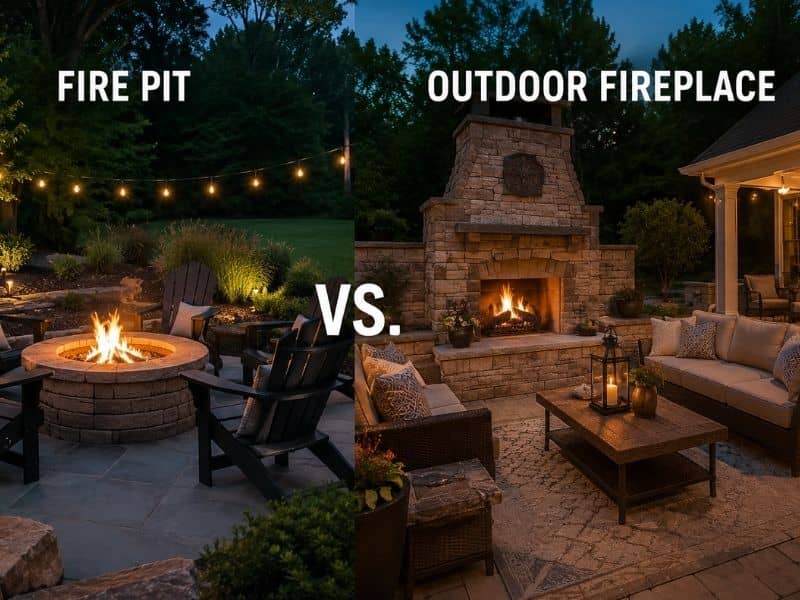
Side-by-side backyard comparison showing a custom outdoor fireplace and a circular fire pit with seating areas at night

Both outdoor fireplaces and fire pits add warmth, beauty, and value to your backyard. A fire pit is the more affordable and flexible option, with built-in masonry versions costing $1,500 to $7,500. A custom outdoor fireplace costs more, ranging from $4,000 to $25,000, but adds more home value and a stronger architectural presence. The right choice depends on your budget, yard size, and how you plan to use the space.

What Is the Difference Between the Two?

A fire pit is an open feature where fire burns in the center and people sit all the way around it. It is casual, social, and works great for roasting food and larger groups.

An outdoor fireplace works like an indoor one but is built outside. It has a firebox, a chimney, and often a mantel. It faces one direction and becomes a permanent part of your patio. Both burn wood or gas, but they create very different experiences.

Cost Comparison

Fire pits cost significantly less than outdoor fireplaces. A simple built-in masonry fire pit starts around $1,500. A custom outdoor fireplace starts around $4,000 and can reach $25,000 for large, fully custom brick or stone builds.

Fire Pit Costs

TypeEstimated Cost
Portable metal fire pit$100 to $500
Simple built-in wood-burning fire pit$1,500 to $2,000
Custom masonry fire pit with stonework$5,000 to $7,500
Gas fire pit with line installation$6,000 to $10,000

Outdoor Fireplace Costs

TypeEstimated Cost
Prefabricated fireplace kit (materials only)$3,000 to $9,000
Custom brick or stone outdoor fireplace$10,000 to $25,000
Large custom fireplace with seating wall$20,000 and up

An outdoor fireplace is a full construction project. It needs a foundation, a chimney, and a firebox built from brick or stone. In most areas, including Huntsville, it also requires a building permit. Installation typically takes one to three weeks.

A custom masonry fire pit can usually be completed in just a few days.

Which One Heats Better?

A fire pit radiates heat in all directions, making it better for warming a larger group. An outdoor fireplace sends heat forward in one direction, which is better for a smaller seating area and works well even on windy evenings.

Because a fire pit is open, wind can push smoke toward guests sitting downwind. An outdoor fireplace draws smoke up through the chimney, so smoke is less of an issue regardless of wind direction.

For warming a large group, a fire pit wins. For a cozy, directed heat source on a covered patio, an outdoor fireplace is the better choice.

Which One Is Better for Entertaining?

Fire pits are better for casual group gatherings because everyone faces each other. Outdoor fireplaces are better for formal or intimate settings with a clear focal point.

Fire pits encourage conversation because everyone sits in a circle and can talk to anyone in the group. They are perfect for family nights, larger parties, and relaxed outdoor hangouts.

Outdoor fireplaces create a more structured setting. Guests sit facing the fireplace, giving the space a formal, polished feel. This works well for dinner parties and quieter evenings.

Which One Adds More Home Value?

An outdoor fireplace typically adds more resale value because it is a permanent architectural feature. A well-built masonry fireplace can recoup up to 78% of its cost in home value. Fire pits add appeal but are often seen as a less permanent feature by buyers.

Both options make your outdoor space more attractive to buyers. But a custom brick or stone outdoor fireplace signals quality and craftsmanship in a way a fire pit alone cannot. If boosting resale value is a priority, an outdoor fireplace is the stronger investment.

Safety: Which Is Safer?

Outdoor fireplaces are generally safer because the fire is enclosed. Sparks and embers stay contained inside the firebox. Fire pits are open, so sparks can escape. A spark screen or cover helps reduce the risk.

With children or pets in the yard, an outdoor fireplace provides more peace of mind. Fire pits can be made safer with a steel spark screen, keeping chairs at a safe distance, and never leaving the fire unattended. Gas fire pits reduce spark risk since they produce a clean, controlled flame.

Permits and Regulations 

Both outdoor fireplaces and permanent masonry fire pits may require a building permit in Huntsville and Madison County. Outdoor fireplaces almost always need one. Check with the City of Huntsville Building Inspections Department before starting any project.

Which One Is Right for You?

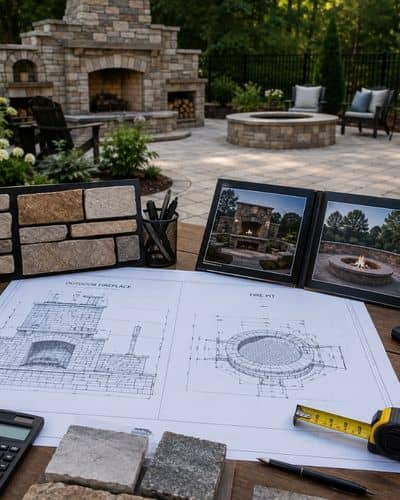
Outdoor fireplace and fire pit design plans with stone samples and layout tools on a backyard patio project table

Use this quick guide to help you decide:

Choose a fire pit if you:

  • Want a more affordable option
  • Have a smaller yard or flexible space
  • Love casual, social gatherings with seating all around
  • Want to cook or roast food over the fire
  • Prefer a faster installation timeline

Choose an outdoor fireplace if you:

Are already investing in stonework, outdoor kitchens, or custom masonry

Want a permanent architectural centerpiece

Have a covered patio or formal outdoor living area

Prefer directed heat without smoke blowing toward guests

Want to maximize home resale value

Frequently Asked Questions

Can I cook on both an outdoor fireplace and a fire pit? 

Fire pits are better for cooking. The open design lets you set a grill grate over the fire. Outdoor fireplaces can work for cooking but the enclosed firebox makes it harder to access the flames.

Do outdoor fireplaces and fire pits need maintenance? 

Yes. Wood-burning fire pits need regular ash cleaning. Outdoor fireplaces need periodic chimney cleaning and mortar checks. Gas versions of both are easier to maintain.

How long does installation take? 

A masonry fire pit typically takes two to three days. An outdoor fireplace takes one to three weeks including foundation and chimney work.

Do I need a gas line for a gas fire pit or fireplace? 

Yes. A licensed gas contractor runs the line before installation. This adds cost but makes the feature much easier to use.

Posted in Outdoor Fireplace | Tagged brick fireplace, fire pit, fireplace masonry

Leave a Review on Google

Leave a Google Review

Leave a Review on YELP

Leave a Yelp Review

Leave a Review on Facebook

Leave a Review on Facebook

CONTACT US

© Copyright 2021 Huntsville Brick & Stone
​​​​Huntsville, Alabama ​35803
Phone: (256) 804-0025

Privacy Policy | Terms of Use

Web Development and SEO by:
Southern SEO

↑