Why Brick Masonry Fails Faster on Homes With Poor Drainage
Brick has a reputation as the material you install once and forget. It’s supposed to last a hundred years with no fuss. On a lot that drains badly, brick masonry can start breaking down in a fraction of that time. Ground moisture climbs up from the wet soil, a problem known as rising damp in brick walls, and the bottom of the wall never gets to dry out. The brick didn’t change. The water around it did. For developers, the lesson is simple. The grading and drainage you set during site work decide how fast the brick on top of it wears out.
What Actually Makes Brick Fail Faster
Brick takes on water and dries out again. That’s normal. Good brick handles that wet-and-dry rhythm for decades.
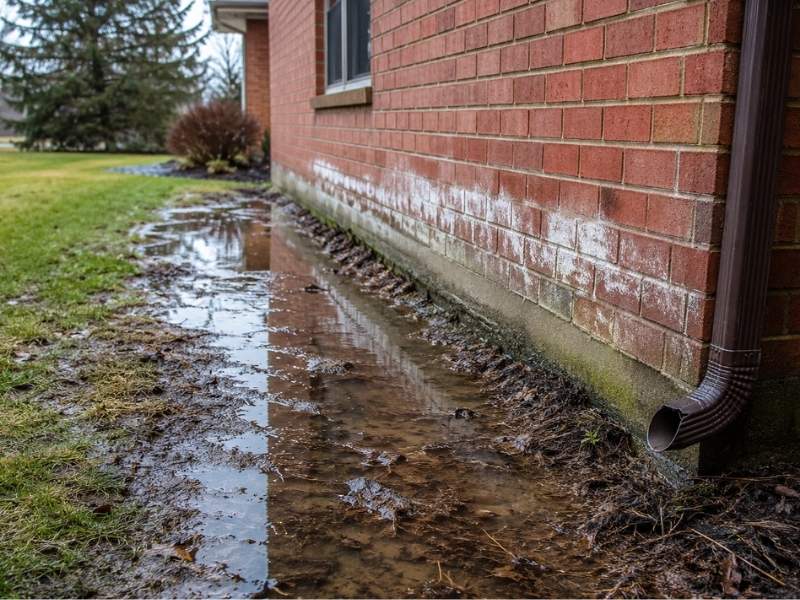
The problem starts when the brick never gets to dry. Poor drainage keeps the soil at the base of the wall soaked. Water sits there, and the brick stays wet most of the time. Now every damage event hits a wall that’s already saturated, with no time to recover between hits. That’s the real reason drainage decides the timeline. The damage comes from moisture that sits and never drains away.
How Ground Water Climbs Into the Wall
Brick is full of tiny pores. When the soil at the base stays wet, those pores pull water upward, the same way a paper towel pulls up a spill. Masons call this rising damp. The wetter the ground, the higher the water climbs.
This is why flashing and weep holes near the base matter so much. The Brick Industry Association says base flashing and weeps should sit no more than 10 inches above the finished ground. That detail blocks ground water from wicking up into the wall. On a wet lot with no break, the water just keeps rising and the lower courses stay soaked.
Why Constant Moisture Speeds the Damage
A wall that stays wet fails in three ways at the same time. Each one feeds the next. Together they shorten the wall’s life faster than any single problem would.
Salt builds pressure inside the brick
Ground water carries dissolved salts. As that water moves through the brick and dries near the surface, the salts crystallize. Those crystals grow and push outward. The pressure cracks the face of the brick and flakes pieces off. You see the white stains first, but the real harm is the force building inside.
Freeze and thaw hit a soaked wall harder
When wet brick freezes, the water inside expands and pries the surface apart. Brick that dried out would shrug this off. Brick held wet by bad drainage can’t. The more soaked the wall, the more likely it cracks and spalls each time the temperature drops. That’s why builders in colder zones spec severe-weather grade brick rated to freeze while wet.
Mortar joints wear out early
Mortar is the sacrificial part of a wall. It wears out before the brick does, on purpose. Constant moisture softens and erodes those joints fast. Once the joints open up, even more water gets in, and the whole wall declines quicker.
The Drainage Choices That Set the Clock
This is the part developers control. Every mechanism above runs on standing water near the base. Move the water and you slow all of it down at once.
- Grade the lot so the ground falls at least 6 inches over the first 10 feet away from the foundation. The IRC requires this for a reason.
- Slope driveways, walks and patios within 10 feet of the wall at least 2 percent away from the building.
- On soil that holds water, install a foundation drain with gravel, filter fabric and a pipe that runs downhill at a quarter inch per foot.
- Discharge that water well away from the base, never back toward it.
- Keep base flashing and weeps no more than 10 inches above the final grade so ground moisture can’t wick up.
None of this is exotic. It’s ordinary site work done right the first time, before the brick ever goes up. Get it right once and the wall stops fighting water for the rest of its life.
Why This Lands on Builders, Not Buyers
Drainage failures are patient. The lot looks fine at closing. The brick looks perfect on move-in day. The spalling and stained joints show up two or three winters later, long after the buyer signed. By then it’s a callback, a warranty claim and a hit to your reputation.
Grading a lot right costs little during site work. Tearing out and replacing failed masonry costs a lot, and it always lands on whoever built it. The brick will outlast the mortgage if the water has somewhere to go. That’s a site decision, and it’s yours to make.
Frequently Asked Questions
Does poor drainage really make brick fail faster, or does it just look worse?
It does real structural harm. The stains are only the surface of it. Constant wetness lets salt pressure, frost and joint erosion grind on the wall with no break, and that steadily shortens how long it lasts.
How far should the ground slope away from a brick home?
The ground should drop at least 6 inches within the first 10 feet of the wall. Hard surfaces like driveways and patios near the home should slope at least 2 percent away. This pushes rain away from the base instead of letting it pool.
What is rising damp in a brick wall?
Rising damp is ground water creeping upward through brick from wet soil below. The pores in the brick act like a wick. It often shows up as a damp, stained band along the lower part of the wall.
Can good quality brick still fail on a wet lot?
Yes. Even high-grade brick wears out early when it can’t dry between soakings. A tougher brick buys time, but it can’t beat water that has nowhere to drain. On a wet lot, the drainage decides more than the brick spec does.
Does every home need a foundation drain?
No. Lots with sandy, fast-draining soil often shed water on their own. Soil that holds water, like clay-heavy ground, usually needs a drain to move water away from the footing before it can rise into the wall.
