How Much Does a Brick or Stone Retaining Wall Cost?
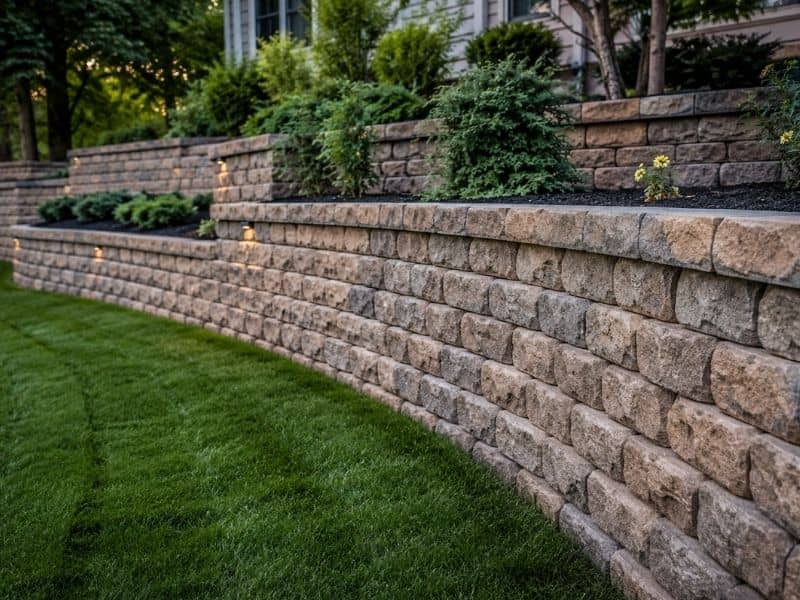
A brick or stone retaining wall costs between $10 and $85 per square foot installed. Most homeowners spend between $3,500 and $12,000 for a standard 50-foot wall that is 2 to 4 feet tall. The final price depends on the material, wall height, and site conditions.
What Is a Retaining Wall and Why Does It Matter?
A retaining wall holds back soil, stops erosion, and creates flat usable space on a sloped yard. It is not just a decorative feature. It does a real structural job, and the material you choose affects how long it lasts and how much it costs.
Brick and natural stone are two of the most durable options available. A well-built brick retaining wall can last over 100 years. Natural stone walls can last anywhere from 50 to 200 years. Both are smart long-term investments for your property.
Cost by Material
Material choice is the biggest factor in pricing. Brick runs $10 to $45 per square foot installed. Natural stone ranges from $10 to $85 per square foot depending on the type.
Brick Retaining Walls
| Wall Type | Cost Per Square Foot |
| Brick veneer over concrete block | $20 to $45 |
| Full brick wall up to 4 ft | $10 to $25 |
| Decorative brick privacy wall 6 to 8 ft | $35 to $65 |
Brick is often used as a veneer over a concrete block core. This gives you the strength of concrete with the classic look of brick. For walls taller than 4 feet, two layers of brick are recommended for better stability.
Labor can make up to 80% of the total project cost. Poor installation is the top reason retaining walls fail early. Hiring an experienced mason is worth it.
Natural Stone Retaining Walls
| Stone Type | Cost Per Square Foot |
| Fieldstone or Sandstone | $20 to $60 |
| Limestone | $25 to $70 |
| Granite | $30 to $80 |
| Slate | $30 to $85 |
| Stone veneer over concrete block | $10 to $45 |
Dry-stack stone walls (built without mortar) let water drain naturally between stones, reducing pressure behind the wall and extending its life.
Cost by Wall Height
The taller the wall, the more it costs. Walls over 4 feet require deeper footings, permits, and sometimes a structural engineer. These requirements add a lot to the final price.
| Wall Height | Cost Per Linear Foot |
| 2-foot wall | $40 to $80 |
| 3-foot wall | $100 to $180 |
| 4-foot wall | $200 to $260 |
| 6-foot wall | Around $360 |
Typical Total Project Costs for a 50-Foot Wall
| Height | Estimated Total |
| 2 ft | $2,000 to $4,000 |
| 3 ft | $5,000 to $9,000 |
| 4 ft | $10,000 to $13,000 |
In Huntsville and Madison County, walls taller than 4 feet usually require a building permit and possibly an engineer’s plans. Structural engineers typically charge $100 to $220 per hour for this work.
What Else Drives the Cost Up?
Beyond material and height, four main factors affect the final price: foundation depth, drainage, site conditions, and design complexity.
Foundation and Footings
Concrete footers cost $15 to $55 per linear foot for most masonry walls. Walls over 4 feet may need footers 3 to 4 feet deep. Rebar reinforcement adds $1.50 to $2.50 per square foot but gives the wall much better long-term strength.
Drainage
Water is the biggest threat to any retaining wall. Without proper drainage, pressure builds up behind the wall and pushes it forward. This causes cracking, bowing, and eventually full collapse.
- French drain: $10 to $35 per linear foot
- Waterproofing membrane: $2 to $10 per square foot
Skipping drainage to save money now often leads to $5,000 or more in repairs down the road.
Site Conditions
Sloped yards can increase total costs by 50% or more because of the extra excavation needed. Rocky or clay-heavy soil requires heavy equipment. Land grading costs $0.40 to $2.00 per square foot.
Design and Extras
Straight walls cost less than curved ones. Adding a cap stone top row costs $5 to $15 per piece. A stone veneer finish adds $5 to $25 per square foot. If you are replacing an old wall, demo and removal costs $15 to $30 per linear foot.
Do You Need a Permit?
Yes, in most cases. Huntsville and Madison County require a permit for walls taller than 4 feet. Walls near property lines may need permits at lower heights. Permit fees range from $50 to $450.
Always check with the City of Huntsville Building Inspections Department before you start. Building without a permit can lead to fines or a forced teardown.
Which Material Is Right for You?
Concrete block is the most budget-friendly structural option. Brick lasts over a century with a classic look. Natural stone provides the best curb appeal and the longest lifespan. Most masons recommend a concrete block core with a brick or stone face.
| Material | Lifespan | Cost Per Sq Ft |
| Brick | 100+ years | $10 to $45 |
| Natural stone | 50 to 200 years | $10 to $85 |
| Concrete block | 50 to 100 years | $15 to $30 |
| Timber | 5 to 20 years | $15 to $30 |
Does a Retaining Wall Add Value?
Yes. Home appraisers estimate a 100% to 200% return on investment for well-built retaining walls. A wall that creates usable flat space and prevents erosion almost always adds more value than it costs.
Frequently Asked Questions
Can I build a retaining wall myself?
Small walls under 2 feet using an interlocking block can work as a DIY project. Brick and stone walls over 3 feet tall should always be built by a licensed mason. Bad footings and missing drainage are the top reasons walls fail early.
Do retaining walls need drainage?
Yes, always. Every masonry retaining wall needs a drainage solution such as weep holes, a French drain, or a gravel backfill layer. A wall without drainage will fail no matter how solid the brickwork looks.
How long does installation take?
A two-mason crew typically finishes a standard 50-foot wall in 3 to 5 days, not counting footing cure time.
