Outdoor Kitchen Features Homeowners Wish They Had Added Earlier
Most homeowners who build an outdoor kitchen are happy with it at first. Then they use it for a season and start a list of what they should have included. This article covers what homeowners wish they had planned for before the build was finished.
A Second Burner
Most outdoor kitchens get built with one grill. That works fine until you need to cook a side dish or boil water at the same time.
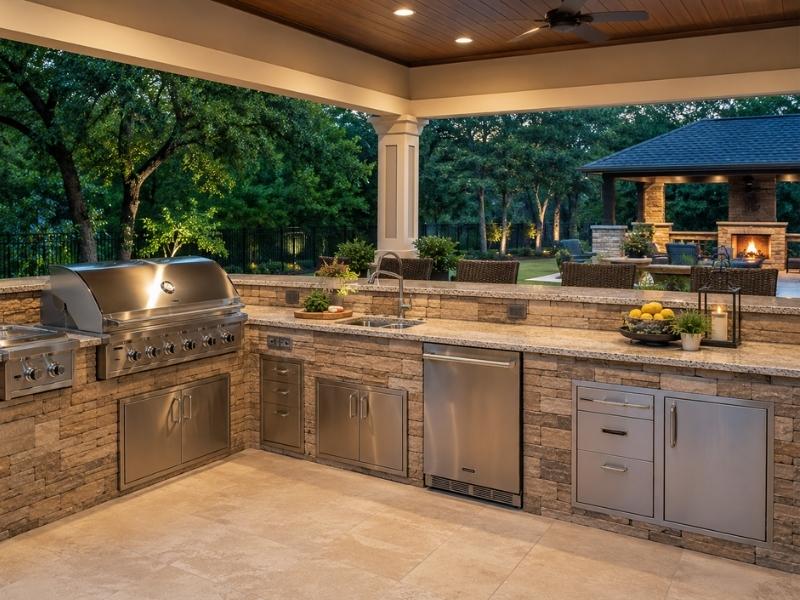
A side burner is one of the most common things homeowners go back and add. Outdoor kitchen features that get skipped almost always cost more to add later. It’s easy to include during the original build. Adding it after means cutting into countertops and reworking the layout.
A single high-BTU burner is enough for most families. The cost during a new build is small. The cost of adding one later is much higher.
A Dedicated Refrigerator
Hauling ice and restocking coolers gets old fast. A real outdoor refrigerator changes how the space works.
Outdoor-rated refrigerators handle heat, humidity and temperature changes that would break a standard indoor unit. They keep drinks cold and free up counter space.
Homeowners who skip this during the build usually regret it once they start having people over. Running back and forth to the house for drinks defeats the point of an outdoor kitchen.
A small undercounter unit fits most layouts. Both styles need a dedicated outlet planned before construction ends.
Enough Electrical Outlets
One outlet is never enough. Most outdoor kitchens get wired with one or two. That fills up fast between a refrigerator, a blender and lighting.
Plan for at least four to six weatherproof outlets spread across the counter. Put some at counter height and some lower for under-counter equipment.
Adding outlets after construction means cutting into finished work. Get an electrician involved early in the planning phase.
A Sink With Hot and Cold Water
A hose nearby is not the same as a real sink. Rinsing food, washing hands and cleaning up all go faster with a proper sink.
Hot water makes the sink useful for cleanup, not just rinsing. Cold-only works for some tasks but falls short when cooking gets serious.
Plan the drain location before the slab is poured. Changing it later means breaking into finished work, and that’s expensive.
A Covered Prep Area Away From the Grill
Counter space fills up fast. Most outdoor kitchens end up with less prep room than the homeowner needs.
The problem gets worse when all the counter space sits right next to the grill. Heat radiates. You can’t set food or prep items too close to a hot cooking surface.
A covered area set away from the heat solves both problems. It gives you room to work and keeps the sun and rain off your prep space. Cooking in direct afternoon sun is miserable. Shade makes the space worth using.
Outdoor-Rated Cabinets With More Storage
Wood cabinets don’t last outside. Homeowners who use indoor-grade materials watch them warp and rot within a few years.
Polymer or stainless steel cabinets are built for outdoor use. They don’t absorb moisture and they clean up easily. They cost more than wood but they’re the only option worth using outside.
Storage is almost always underestimated. Grilling tools, plates, cleaning supplies and fuel all need a place to go. Build in more cabinet space than you think you need. Running out of storage means carrying things back and forth from the house, which is exactly what the space was meant to avoid.
Good Lighting for Evening Use
An outdoor kitchen without good lighting stops being useful after dark. Most builds include one overhead light or a few string lights. Neither works well for cooking.
Task lighting over the grill and prep surfaces is different from general lighting. You need to see what you’re cooking. LED strips under upper cabinets or hood vents work well for this. They’re low-profile and easy to install during construction.
Motion-activated lighting on the path from the house to the kitchen is another thing homeowners add later once they realize how often they walk that route in the dark.
Numbers Worth Knowing
Outdoor-rated appliances carry different warranties than indoor models. Most manufacturers void warranties on indoor appliances used outside.
A dedicated 20-amp circuit is the minimum recommended for outdoor kitchen appliances. Running too many appliances on one circuit trips breakers and creates risk.
The American Institute of Architects reports steady increases in outdoor living space requests, with outdoor kitchens among the most asked-for features.
Polymer and stainless outdoor cabinets typically carry 10 to 15-year warranties. Wood cabinets used outdoors rarely last more than three to five years without heavy upkeep.
Frequently Asked Questions
What outdoor kitchen features do homeowners most often wish they had added?
The most common regrets are a second burner, a dedicated outdoor refrigerator, enough electrical outlets, a sink with hot and cold water, more storage and proper task lighting. These are all much cheaper to include during the original build than to add later.
How many electrical outlets does an outdoor kitchen need?
At least four to six weatherproof outlets spread across the counter. Plan outlets for both counter-height appliances and under-counter equipment. All outlets need to be on a dedicated circuit sized for the expected load.
Do outdoor kitchens need outdoor-rated appliances?
Yes. Indoor appliances are not built for outdoor temperature swings and humidity. Using them outside voids the warranty and shortens their life. Always use outdoor-rated or commercial-grade equipment for any exterior installation.
How much counter space does an outdoor kitchen need?
More than most people plan for. Four to six feet of usable prep surface is a good starting point. A prep zone away from the grill adds more usable space and keeps food away from direct heat. Most homeowners wish they had built more counter space once they start using the kitchen.
Can I add features to an outdoor kitchen after it’s built?
Some things can be added later, but most cost more than they would have during the original build. Electrical, plumbing and structural changes require breaking into finished work. Plan everything before construction starts.
