A Stone Mason’s Honest Guide to Building an Outdoor Kitchen That Lasts
Building an outdoor kitchen is one of the best investments a homeowner can make. According to Grand View Research, the global outdoor kitchen market was valued at $26.35 billion in 2025 and is projected to reach $52.75 billion by 2033. More homeowners are adding outdoor cooking spaces every year, and it is easy to understand why. A well-built outdoor kitchen adds living space, lifts your home’s value, and gets used year after year.
But here is what most people find out too late: the material you choose determines everything. A poorly built outdoor kitchen can crack, rust, or fall apart within a few seasons. A well-built masonry kitchen can last 30 years or more.
We have seen both outcomes.
What Makes a Stone or Brick Outdoor Kitchen Last?
A stone or brick outdoor kitchen holds up because masonry is non-combustible, weather-resistant, and structurally stable. Unlike prefab steel or modular kits, a properly built masonry kitchen will not rust, warp, or shift over time. With the right mortar, a solid base, and sealed countertops, it can last 30 years or more.
Why Masonry Outlasts Prefab Kits
Prefab outdoor kitchen kits are easy to understand at first glance. Prices start low, and they look finished right out of the box. But most are not built for long-term outdoor use. The frames rust after a few seasons. The finishes fade in the sun. The structures shift as the ground moves beneath them.
A custom masonry outdoor kitchen is built on a concrete block or steel frame, then finished with brick or stone veneer. It does not move, corrode, or deteriorate the way prefab units do. The upfront cost is higher, but you are not rebuilding it five years from now.
Getting the Base Right Before Anything Else
Before any stone or brick goes up, the foundation needs to be solid. The structure has to support the combined weight of stone countertops, appliances, and years of heavy use. Masons build outdoor kitchen frames using concrete masonry units, then apply mortar and veneer on top. This is the most important step in the entire build. It is also the step most DIY projects skip or get wrong.
The Best Stone and Brick Materials for an Outdoor Kitchen
Granite is the top choice for outdoor kitchen countertops. It handles direct heat from grills, resists UV fading, sheds moisture, and holds up to daily wear. For most granite types, sealing twice a year, once before summer and once before winter, keeps it performing well for decades.
Quartzite is the premium option. With a Mohs hardness rating of 7 or higher, quartzite is UV-stable, scratch-resistant, and handles heat from grills and direct sunlight without breaking down. Homeowners who want a high-end look with real long-term durability should take quartzite seriously.
For the base structure, natural stone veneer and brick veneer are both solid choices. Stone veneer gives the kitchen a natural, upscale look. Brick veneer is a classic option that pairs well with homes that already have brick on the exterior. In both cases, the veneer is applied over the concrete block frame using the correct outdoor mortar.
What to avoid outdoors: Marble, limestone, and travertine look beautiful inside but do not belong in an outdoor kitchen. All three are porous, sensitive to food and grease spills, and vulnerable to freeze-thaw damage. They will stain, etch, and crack over time.
Outdoor Kitchen Layouts Worth Considering
The L-Shape
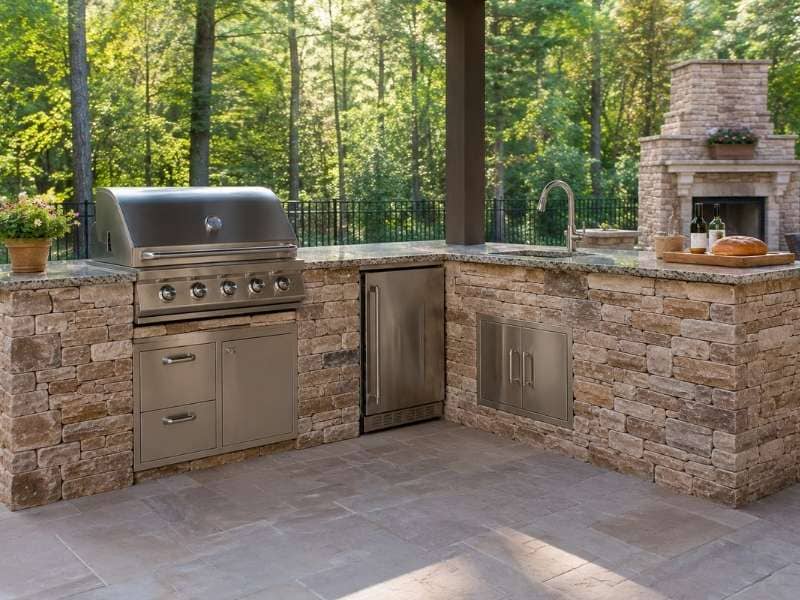
The L-shape is the most popular layout because it gives you good counter space without taking over the patio. It works best in corner areas beside a fence, wall, or the back of the house. A built-in grill anchors one end, while prep space and a sink run along the other side.
The Freestanding Island
A freestanding brick or stone island is a good starting point for homeowners who want an outdoor kitchen but are not ready for a full build. A basic island includes a built-in grill, a stone countertop, and storage underneath. It stands on its own as a complete setup and can always be expanded later.
The Full Kitchen With a Stone Fireplace or Stone Hearth
For homeowners who want a true backyard living space, pairing an outdoor kitchen with a stone fireplace or stone hearth is worth the investment. The kitchen and fireplace can often share a structural wall, which keeps material and labor costs lower. The result is an outdoor room built for cooking, entertaining, and gathering in one connected space.
What Does a Stone or Brick Outdoor Kitchen Cost?
Industry data shows the national average for a professionally installed outdoor kitchen runs between $13,000 and $17,000, with most custom masonry builds landing between $10,000 and $35,000. According to Grand View Research, the U.S. outdoor kitchen market reached $9.7 billion in 2025 alone, reflecting how mainstream these projects have become.
Here is a general breakdown to help with planning:
Basic Build (grill island with brick or stone base, granite countertop): $7,000 to $16,000
Mid-Range Build (full L-shape kitchen, stone veneer, stone patio pavers, sink): $16,000 to $30,000
Premium Build (full outdoor kitchen, stone fireplace, stone pavers, covered structure): $30,000 to $60,000 or more
The return on that investment is strong. Industry estimates consistently place the ROI for outdoor kitchens between 55% and 200%, depending on material quality, design, and your local real estate market. That range beats most other home improvement projects.
Mistakes We See on Almost Every DIY Outdoor Kitchen
Using indoor mortar outside. Standard mortar is not designed for outdoor temperature swings, heavy moisture, or freeze-thaw cycles. Outdoor masonry requires Type S mortar, which offers greater flexibility and weather resistance. The wrong mortar causes joints to crack and crumble within just a few seasons.
Applying veneer directly over wood framing. Wood expands and contracts with heat and humidity. When veneer goes directly onto a wood frame, the movement causes the stone or brick to crack and pull away over time. The correct base is always a concrete block or steel frame first.
Picking the wrong countertop material. Marble looks great in a showroom but stains and pits quickly outdoors. Travertine has the same weakness. Stick with granite or quartzite for countertops that will actually hold up year after year.
Skipping the sealer before first use. Even granite needs to be sealed before it faces rain, grease, and temperature changes outdoors. Many homeowners skip this step and notice staining after the very first cookout. A quick sealing job before you fire up the grill for the first time makes a lasting difference.