
Stone pavers fail for one reason more than any other: the wrong material for the wrong load. Developers picking pavers based on looks alone end up with cracked surfaces, shifting slabs, and costly rework within five years. Choosing the best stone pavers for long-term durability comes down to five factors: stone type, finish, thickness, base prep, and drainage. Get those right and the surface lasts 30 years or more.
Why Stone Type Matters More Than Price
Not all natural stone paving materials are equal. Granite, limestone, sandstone, and travertine all behave differently under traffic and weather.
Granite is the standard for high-traffic commercial use. It scores 6 to 7 on the Mohs hardness scale. It handles heavy vehicle loads without cracking and resists water absorption at under 0.5% by weight. It costs more upfront, but replacement rates are low.
Limestone is softer, scoring 3 to 4 on the Mohs scale. It works for pedestrian paths and low-traffic plazas. It’s not suited for driveways or loading zones. Water absorption rates run 3% to 10%, which causes surface spalling in wet or freezing conditions.
Sandstone falls in the middle. It’s visually warm, but its porosity (up to 20% absorption in low-grade cuts) makes sealing non-negotiable in areas with heavy rain.
Travertine is popular for pool decks and patios. Its natural voids reduce slip risk. But unfilled travertine collects debris and fails faster under constant foot traffic.
Hardness and Load Ratings
For commercial or mixed-use development, stick to stone rated above 5 on the Mohs scale. For any surface taking vehicle weight, granite or basalt is the practical choice. Basalt scores 5 to 6 and absorbs less than 1% water, making it one of the more reliable options for parking areas.
Freeze-Thaw Performance
In climates where temperatures drop below freezing, water absorption is the main durability risk. Water enters pores, freezes, expands, and breaks stone from within. Any paver with absorption above 3% needs sealing before it’s exposed to a hard winter. Low-absorption stone (granite, basalt) skips that problem almost entirely.
How to Choose the Best Stone Pavers for Long-Term Durability: Surface Finish Options
Finish affects both safety and wear rate.
Flamed finish creates a rough, non-slip texture through high heat. It’s standard on commercial walkways and pool surrounds. It hides surface wear well over time.
Honed finish is smooth without polish. It’s appropriate for interior uses or covered outdoor areas. It shows scratches faster than flamed stone.
Bush-hammered finish produces a textured, dimpled surface. It’s one of the better choices for ramps and public plazas where ADA slip resistance matters.
Polished finish looks clean in renderings. On exterior surfaces under rain, it becomes a liability. Avoid it for any outdoor application that sees regular foot traffic.
Thickness and Installation Depth
Paver thickness affects load distribution directly. Thin pavers flex under load and crack at the edges.
Standard guidelines by use type:
- Pedestrian-only areas: 30mm minimum
- Light vehicle traffic (passenger cars): 50mm minimum
- Heavy vehicle or forklift traffic: 80mm minimum
Cut-to-size pavers need tighter tolerances than tumbled or irregular stone. A 2mm variance across a 600mm slab causes rocking, which accelerates base erosion underneath.
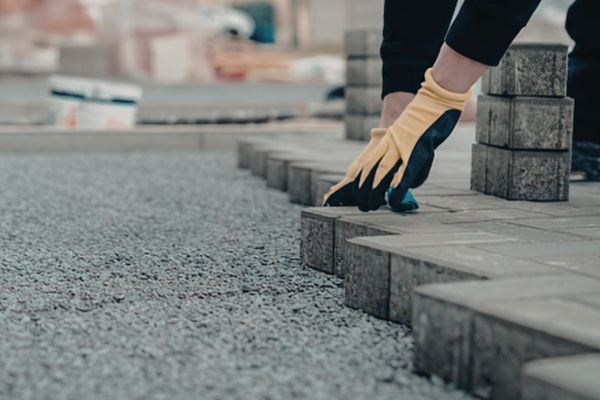
For large-format pavers (600mm x 600mm and above), use full-bed mortar setting, not spot adhesive. Spot setting leaves voids that collapse under point loads.
Drainage and Base Preparation
Bad drainage is the leading cause of paver failure. Water sitting under stone erodes the base, causes differential settling, and eventually pops pavers out of plane.
Slope matters too. A 1% to 2% cross-fall across the surface moves water off the pavers and away from the base. Flat installations hold water and fail faster.
For large paved areas, consult a licensed civil or site engineer on drainage plans. Getting the slope wrong across a 500sqm plaza isn’t a small fix.
Maintenance Costs Over Time
Low purchase price often means high maintenance cost. This is worth running through a 10-year cost analysis before locking in a spec.
Sealing: Porous stone (limestone, sandstone, some travertine) needs sealing every 2 to 5 years depending on traffic and climate. Budget $3 to $8 per square foot per sealing cycle.
Joint repair: Polymeric sand joints last 7 to 10 years before reapplication. Standard sand joints need attention every 3 to 4 years.
Replacement rate: Dense granite or basalt in a properly prepared base rarely needs individual paver replacement. Softer stone in high-traffic areas can see replacement rates of 2% to 5% of the surface area within 10 years.
Developers who spec granite for high-use areas consistently report lower 10-year maintenance costs than those who choose limestone for its lower upfront price.
Frequently Asked Questions
What is the most durable stone paver for commercial use?
Granite and basalt are the most durable stone pavers for commercial use. Both score above 5 on the Mohs hardness scale, absorb less than 1% water, and handle vehicle loads without cracking. For high-traffic areas like parking lots, plazas, and driveways, these two materials consistently outperform softer stone options over a 20 to 30-year period.
How thick should stone pavers be for a driveway?
Stone pavers for driveways that handle standard passenger vehicles should be at least 50mm thick. For areas with heavy vehicles, delivery trucks, or forklifts, 80mm is the minimum. Thinner pavers flex under load and crack at the edges, especially if the base isn’t fully compacted.
Do stone pavers need to be sealed?
It depends on the stone type. Granite and basalt have very low water absorption and generally don’t need sealing. Limestone, sandstone, and some travertine absorb water at rates that cause surface damage over time, so sealing every 2 to 5 years is recommended. Any stone used in a freeze-thaw climate should be assessed for porosity before skipping the sealer.
What causes stone pavers to crack or shift?
The two main causes are poor base preparation and inadequate drainage. A weak or uncompacted sub-base allows differential settling under load. Water that sits under pavers erodes the base and causes pavers to shift out of plane. Using the wrong thickness for the intended load is the third common cause.
Can stone pavers be used for ADA-compliant surfaces?
Yes, with the right finish. Bush-hammered and flamed finishes meet slip-resistance requirements for accessible surfaces. Polished or honed finishes don’t meet ADA slip-resistance standards for exterior use. Surface cross-fall must also stay within ADA limits (typically no more than 2% cross slope).