↓
 

Huntsville Brick Stone

Brick & Stone Masons in Huntsville, AL

Huntsville Brick Stone
  • Home
  • Brick Masonry
  • Stone Masonry
  • Indoor Fireplaces
  • Outdoor Fireplaces
  • Custom Tile Showers
  • Retaining Walls
  • Gallery
Home→Tags stone masonry - Page 4 << 1 2 3 4 5 6 >>

Tag Archives: stone masonry

Post navigation

← Older posts
Newer posts →

Blending New Natural Stone With Older Masonry Without Obvious Patchwork

Huntsville Brick Stone Posted on August 28, 2026 by HuntsvilleBSAugust 17, 2026
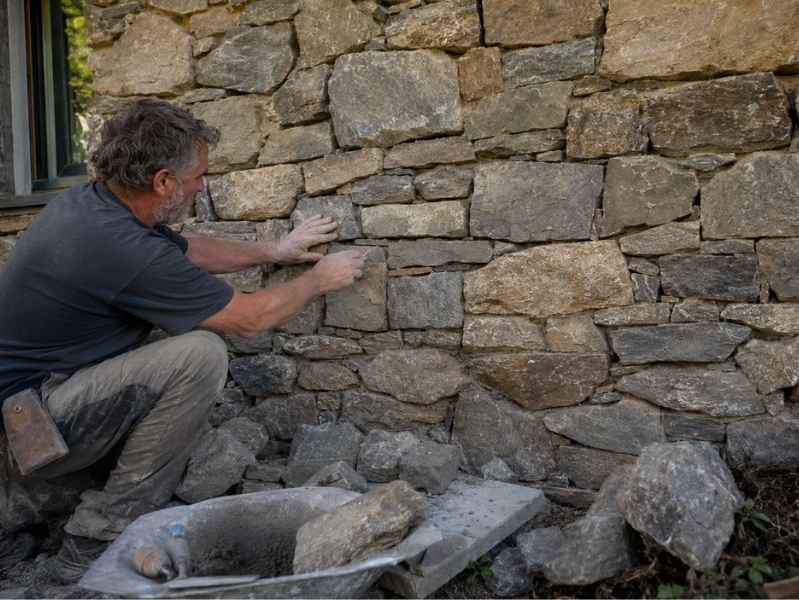
Stone mason blending new natural stone with older masonry in Huntsville Alabama

Fixing a stone wall sounds simple enough. Find a stone that matches, set it in place, done. Any experienced stone mason will tell you it’s rarely that easy. Color is only one small piece of the puzzle. Get the size wrong, the texture wrong, or the placement wrong, and a repair can stick out like a fresh patch on an old jacket, even when the color is a near perfect match.

Start With the Stone’s Size, Shape, and Surface Character

Before picking out replacement stone, a stone mason needs to study the existing wall closely. Not just the color. The thickness of each piece. The texture on the face. The shape of the edges. How much the sizes vary from stone to stone.

Older stonework almost always has some irregularity built in. Pieces were cut and set by hand, often decades ago, and that shows in small ways. Newer stone, especially machine cut material, tends to look far more uniform. If a mason drops uniform new stones into an irregular old wall, the difference shows up fast, even if the color itself is close.

This is about the physical character of natural stone specifically. It’s a different conversation from matching brick, which works differently and gets its own coverage elsewhere.

Blend Several New Stones Instead of Creating One Obvious Repair Zone

It’s tempting to grab a handful of matching stones and set them all in the same tight area. That’s often the fastest way to finish a repair. It’s also one of the easiest ways to end up with a patch that everyone can spot from the sidewalk.

When identical new stones get clustered together, they read as a block, separate from the wall around them. Spreading compatible stones out across the repair area works a lot better. It reproduces the natural mix of sizes and shades that older stonework already has, instead of creating one obvious zone that looks freshly worked.

This is specifically about how new stones get placed during a repair. It’s not the same as blending an entire new addition into an existing house, which is its own topic already covered on the site.

Follow the Existing Stone Layout and Joint Rhythm

Older stone walls develop a kind of rhythm over time. Larger stones next to smaller ones. Joints that shift and wander instead of running perfectly level. Horizontal breaks that don’t line up in a neat grid.

A repair that ignores this rhythm tends to stand out, even with well matched stone. Straight, evenly spaced courses look orderly, but that order is exactly what makes them look wrong next to older, more irregular work. A mason working carefully will study how the existing stones are arranged and follow that same loose pattern, rather than introducing a cleaner, more repetitive layout that doesn’t belong.

Avoid a Straight Visual Seam Between Old and New Stone

Even when the stone selection is right, a sharp seam between old and new sections can give the repair away. A straight vertical or horizontal line where new work meets old often reads as a separate panel, almost like a patch stitched onto a shirt.

A skilled stone mason works against that. Instead of stopping the new stone in a clean, straight line, the transition gets worked into the surrounding masonry, with stones interlocking or overlapping in a way that breaks up any obvious edge. The goal is a meeting point that’s hard to trace with your eye, not one you can spot from across the yard.

This is narrowly about how repair transitions get handled. It’s a different issue from seam placement on a new addition, which comes up in a separate conversation entirely.

Judge the Finished Stone Repair From Normal Viewing Distance

Once the work is done, it’s tempting to walk right up and inspect every joint up close. That’s actually the wrong way to judge it. Natural stone repairs should be checked from several feet away, in regular daylight, the way anyone walking by would actually see the wall.

From that normal distance, ask a few simple questions. Does one section look noticeably lighter than the rest? Does it look too even, too flat or too freshly cut compared to everything around it? Small differences that seem obvious up close often disappear once you step back and look at the whole wall together, since your eye naturally blends the variation across the full surface instead of zooming in on one patch.

Frequently Asked Questions

Does new natural stone need to match every old stone exactly? 

No. Natural stone already contains a lot of variation on its own, so the real goal is a compatible overall blend in size, texture, shape and general look, rather than hunting for identical pieces that don’t really exist in nature anyway.

Why can a natural stone repair look like a patch even when the color is close? 

Obvious patchwork usually comes from something other than color. Differences in stone size, surface texture, joint spacing, cutting style or grouping too many similar replacement stones together in one spot can all make a repair stand out.

Can a stone mason make new stone look less obvious beside older masonry? 

Yes, to a real degree. Careful stone selection, varied placement, matching the existing layout and avoiding a hard, straight transition all help new work blend in more naturally. That said, weathering and age take time, so brand new material may not look fully identical right away.
Posted in Stone Masonry | Tagged stone masonry

Stone Patio Edges That Stay Defined Beside Lawns and Planting Beds

Huntsville Brick Stone Posted on August 24, 2026 by HuntsvilleBSSeptember 5, 2026
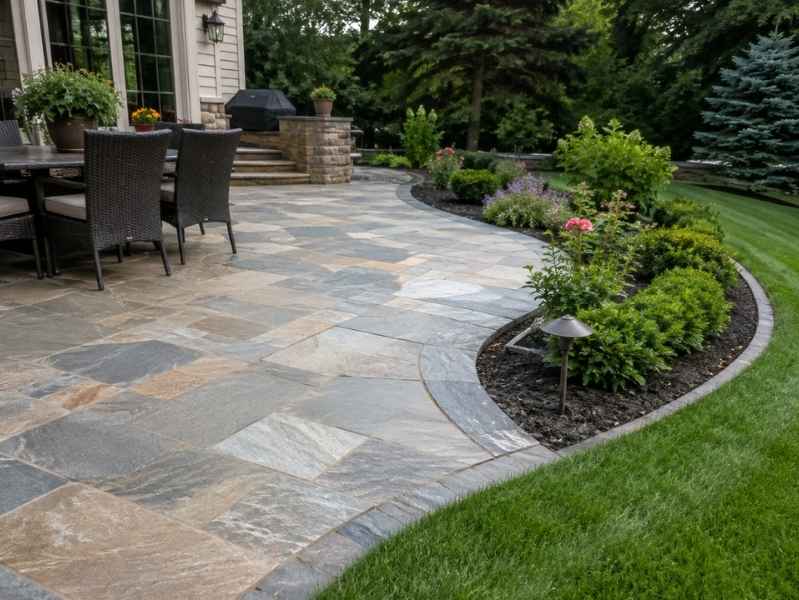
Stone patio with defined edges beside lawns and planting beds in Huntsville Alabama

A brand new stone patio always looks crisp. The edge is sharp, the stone is clean, and the line between patio and yard couldn’t be clearer. Give it a season or two, though, and that clean line can start to blur. Grass creeps in. Mulch drifts over. Soil piles up along the border. Keeping that edge sharp isn’t just about looks. It’s what makes a stone patio feel finished instead of half done.

Why a Stone Patio Edge Can Lose Its Clean Shape Beside Grass

Grass doesn’t stay put. It spreads outward a little more every season, and it doesn’t ask permission before it starts creeping over the edge of a stone patio. On top of that, soil naturally shifts and settles near the border, especially after rain.

Add in regular yard work like mowing, edging, and trimming, and the line between lawn and patio can slowly get pushed around. Mowers throw clippings onto the stone. Trimmers miss a little grass here and there, and it grows in. Bit by bit, a border that used to be obvious becomes something you have to squint at to find.

This isn’t about the patio falling apart or wearing out. It’s specifically about that edge losing its shape simply because grass and soil are living things that keep moving, even when the stone underneath stays exactly the same.

Creating a Clear Transition Between Stone Patios and Planting Beds

Planting beds brings their own version of the same problem. Mulch spreads. Soil washes toward lower ground. Plants grow outward past where they were originally placed. Without a clear break, all of that material can slowly work its way onto the patio surface.

A well planned transition keeps mulch and soil where they belong, on the bed side of the line. This isn’t just practical. It also changes how the whole space reads visually. A patio that blends into a bed with no clear separation looks unfinished, even if the stonework itself is solid. A patio with an intentional edge next to the bed looks like it was actually designed that way, not like paving that happened to stop somewhere near the flowers.

Straight, Curved, and Irregular Stone Patio Edge Designs

The shape of a patio’s outer edge changes how the whole space feels. A straight edge gives a patio a structured, almost formal look. It reads as clean and deliberate, especially next to a lawn with straight mowing lines.

Curved edges do something different. They follow the natural lines of a garden bed instead of fighting against them, which usually looks more relaxed and connected to the planting around it. Then there’s the irregular edge, often built with natural stone that has uneven, organic shapes. That kind of border creates a softer transition, one that feels more like the patio grew out of the landscape instead of getting dropped on top of it.

None of these shapes is automatically better. It depends on what’s around the patio and what kind of feeling the space is going for. What matters here is the outline itself, not the pattern of the stones filling the space inside it.

Keeping Soil, Mulch, and Grass From Creeping Onto the Patio Surface

Even a well designed edge needs some help staying clean over time. Grass and soil don’t stop moving just because a border looks nice on installation day. There are practical ways to slow that creep down at the perimeter, keeping the patio surface separated from whatever’s growing next to it.

This isn’t about drainage systems or fixing loose stones, which are separate topics on their own. It’s specifically about the outer edge and what keeps lawn material and bed material from slowly working their way onto the finished stone. A well thought out perimeter does a lot of that work quietly, without needing constant attention.

Making the Patio Edge Look Finished From Every Viewing Angle

The outside row of stone carries more visual weight than people usually expect. It’s the part of the patio you see first from the house, from the lawn, from a garden path, or from pretty much any angle around the yard.

Consistent cuts along that outer row make a big difference. So does a transition that looks planned rather than accidental. When the perimeter is handled with care, the whole patio reads as complete, like it was meant to end exactly where it does. Skip that attention to the edge, and even a well built patio can look like the paving simply ran out of room and stopped.

That outer row is really the patio’s frame. Get it right, and everything inside it looks better too.

Frequently Asked Questions

Should a stone patio have a defined edge beside a lawn? 

Yes. A clear edge keeps a cleaner visual line between the patio and the surrounding turf. It also makes routine lawn care, like mowing and edging, easier to manage right at the perimeter.

Can a stone patio have a curved edge beside planting beds? 

Yes, curved edges can work well next to beds with flowing, organic shapes. The stone layout and perimeter still need to be planned carefully, so the curve reads as an intentional transition rather than an afterthought.

Why does grass start growing over the edge of a stone patio? 

]Grass spreads outward over time, soil gradually builds up near the border, and general landscape growth slowly pushes into space. All of this can make a once clearly visible edge look less distinct as the seasons pass.

Posted in Stone Masonry | Tagged stone masonry

Walkways That Connect Patios, Gardens, and Side Entrances More Naturally

Huntsville Brick Stone Posted on August 17, 2026 by HuntsvilleBSAugust 11, 2026
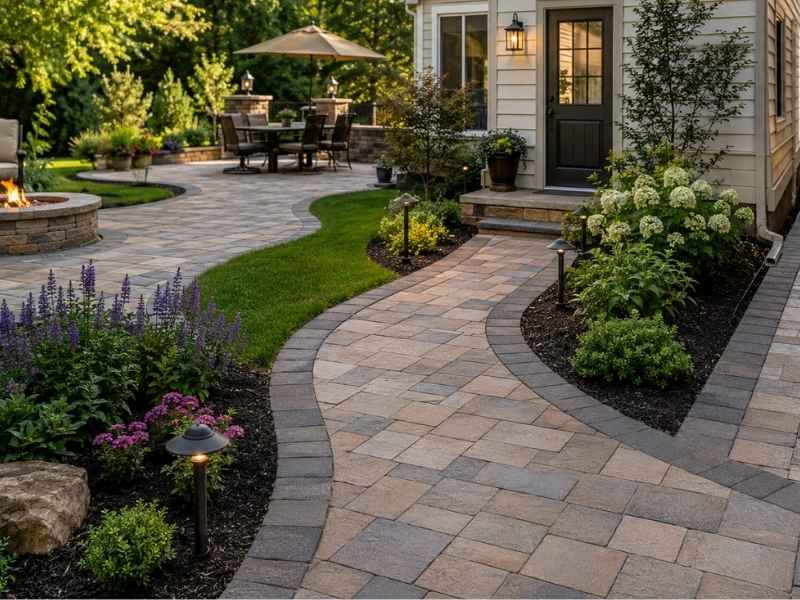
Stone pavers walkway connecting a patio, garden, and side entrance in Huntsville Alabama.

A good walkway does more than get you from one spot to another. When it’s built with stone pavers, it becomes part of the yard itself, tying together patios, gardens, and side doors instead of just sitting on top of the grass. Many homeowners add a path later and notice it feels out of place, like it was dropped in without much thought behind it. The fix isn’t complicated. It just takes some planning before the first paver goes down. 

Designing Walkway Routes That Improve Movement Between Outdoor Spaces

Before anyone picks out stone pavers or a pattern, the route itself needs attention. Think about how your family already moves through the yard. Do you cut across the grass to reach the garden? Do guests walk along the side of the house to get to the backyard without going through the front door? Those worn paths in the grass are clues. A walkway that follows them will feel natural right away, because it’s just paving over a route people already use.

Paths that ignore this pattern often get skipped. People will still walk the shorter, more direct way, even if it means stepping on grass or mulch instead of the new stones. A mason who takes time to watch how a property gets used, not just how it looks on paper, will lay out a route that people actually choose to walk on.

Creating Smooth Transitions Between Patios, Lawns, and Garden Areas

Yards rarely sit at one flat level. There might be a slight rise near the patio, a dip by the garden beds, or a low spot where water collects after rain. A walkway needs to handle these changes without forcing anyone to watch their step. That might mean a gentle slope in one section, or a shallow step where the ground drops more sharply.

Material choice also plays a part in how connected two areas feel. A path that shifts abruptly from a patio surface to bare grass can feel like two separate projects instead of one yard. Choosing stone pavers that echo the tone or texture of the patio, even slightly, helps the eye read the space as one continuous area. Garden borders, mulch beds, and low plantings along the edges soften the transition even more, so the walkway looks like it grew out of the landscape instead of being added on top of it.

Planning Side Entrance Walkways for Better Access and Everyday Use

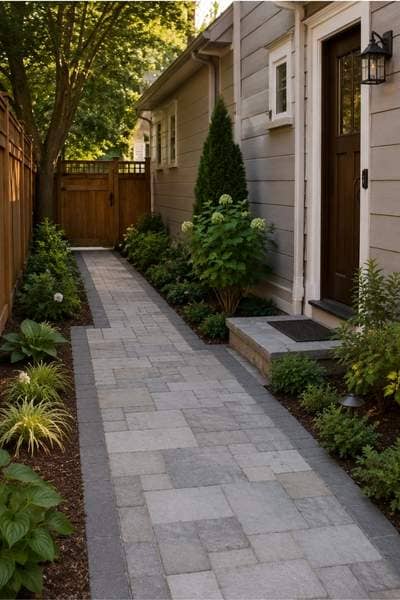
Stone paver side entrance walkway connecting a home doorway and garden area in Huntsville Alabama.

Side entrances get more foot traffic than most homeowners expect. Deliveries, trash cans, garden tools, and quick trips to the mailbox all pass through that door. A narrow, uneven path in that spot can turn into a daily annoyance, especially in wet weather or when someone is carrying groceries.

A well-planned side entrance walkway needs enough width for two people to pass, or for a cart to roll through without trouble. It should also connect logically to the driveway or gate, not just end at the door with no clear link to the rest of the property. Drainage matters here too, since side yards often sit in shade and stay damp longer than open lawn areas. A walkway that accounts for water flow will hold up better and stay safer to walk on through the seasons.

Choosing Walkway Layouts That Match the Shape of Your Property

Not every yard calls for the same kind of path. A long, narrow lot might work best with a straight walkway that gets people where they’re going without wasted space. A wider, more open yard has room for a curved route that moves around trees, garden beds, or a fire pit.

Segmented walkways, where the path breaks into shorter sections connected by small landings or steps, can work well on properties with more than one destination point, such as a patio, a shed, and a garden all in different directions. The goal is circulation, not decoration for its own sake. A layout that fits the property’s shape will hold up visually for years, while one that ignores the lot’s natural lines can end up looking forced no matter how nice the materials are.

Building Walkways That Feel Like a Natural Extension of the Home

The best walkways don’t stop at the edge of the patio. They pick up where the house architecture leaves off. A path near a covered porch might echo the roofline’s direction. A walkway near large windows might widen slightly to match the scale of the glass. These small choices add up, and they’re the kind of detail a homeowner might not name directly but will notice if it’s missing.

Long-term use matters just as much as first impressions. A walkway that looks good on installation day but cracks or shifts within a few years isn’t doing its job. Proper base preparation, drainage planning, and material selection all affect how the path performs over time. When these pieces come together, the walkway stops feeling like an added feature and starts feeling like it was always part of the home’s design.

Frequently Asked Questions

What is the purpose of a walkway between outdoor areas? 

A walkway creates a clear route that connects different parts of a property. It makes it easier to move between spaces and gives the yard a more organized layout overall.

Should a walkway connect a patio to a garden area? 

Yes. A well-planned walkway can make separate outdoor areas feel connected. It creates a comfortable transition between spots for entertaining, planting beds, and access points around the yard.

How do you plan where a masonry walkway should go? 

Start by watching how people move through the property. Placement should also account for entrance locations, existing landscaping, drainage patterns, and how the space gets used day to day.

Can a walkway improve a home’s outdoor design? 

Yes. A properly planned walkway adds structure to an outdoor area. It guides movement and creates a stronger sense of connection between different parts of the property.

Why hire a masonry professional for a walkway project? 

A masonry professional can plan the route properly, choose materials suited to the site, and build a path meant to last, one that fits naturally with the rest of the property.

Posted in Stone Masonry | Tagged stone mason, stone masonry

Post navigation

← Older posts
Newer posts →

Leave a Review on Google

Leave a Google Review

Leave a Review on YELP

Leave a Yelp Review

Leave a Review on Facebook

Leave a Review on Facebook

CONTACT US

© Copyright 2021 Huntsville Brick & Stone
​​​​Huntsville, Alabama ​35803
Phone: (256) 804-0025

Privacy Policy | Terms of Use

Web Development and SEO by:
Southern SEO

↑