Stone Pavers for Walkways Between Split-Level Yard Areas
A well-built walkway with stone pavers solves that, but only if the route, steps, base, and drainage are planned together from the start. A split-level yard gives you natural rooms outside. The upper terrace might hold a stone pavers and outdoor kitchen, while the lower lawn leads to a garden or fire pit. The trouble starts when people cut across the grass to get from one level to the other, wearing muddy paths and slipping on wet slopes.
This guide is for homeowners with sloped or terraced yards who want a durable connection between outdoor spaces. Landscape designers and builders will find it useful too. The goal is a path that feels natural to walk, stays level and safe, and doesn’t wash out after heavy rain. Most walkway failures on slopes come from skipping the planning steps below.
Planning Walkway Routes Between Different Yard Elevations
Start by watching how people already move through the yard. The worn grass between the back door and the lower lawn usually shows the route people want to take. Fighting that path with a long, winding walkway rarely works, because people keep cutting corners. Build the walkway close to the natural route whenever the slope allows.
Next, map the elevation change. A gentle slope may only need a gradually sloped walkway, while a steeper drop usually calls for steps or a combination of steps and landings. Note where the path will meet existing features like a brick patio, retaining wall, outdoor fireplace, or garden bed. Those connection points set the heights the walkway has to match.
Width matters more than many owners expect. A narrow path feels tight when you’re carrying food from an outdoor kitchen or walking beside a guest. Wider walkways feel more comfortable and safer on slopes, though the right width depends on traffic, space, and design. Discuss how you’ll use the path with your mason before choosing a size.
Choosing Stone Pavers for Sloped and Stepped Walkways
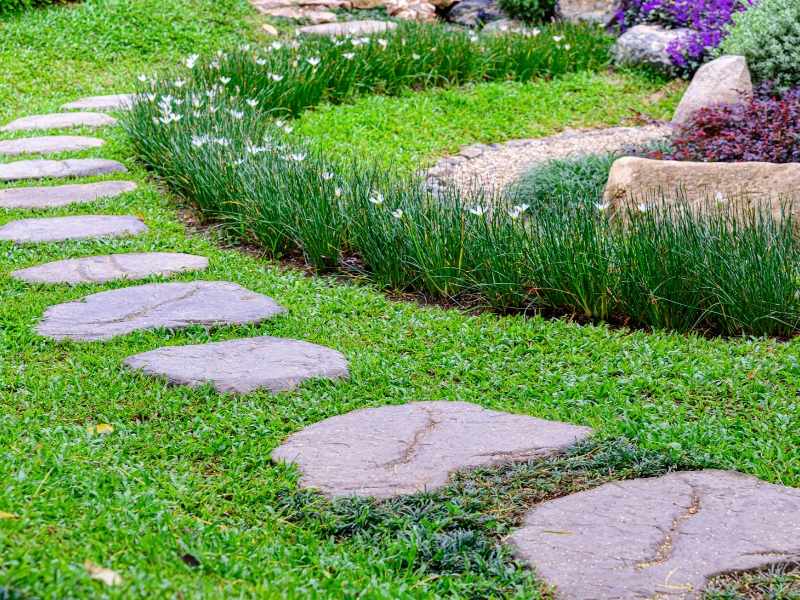
Stone pavers are flat units of natural or manufactured stone pavers set on a prepared base to form a walking surface. On sloped walkways, the surface texture matters as much as the color. Smooth, polished finishes can turn slick when wet or covered with leaves. Textured or thermal-finished stone usually gives better footing, but ask to see and feel samples before deciding.
Thickness and consistency matter on slopes as well. Uniform pavers sit flatter and are easier to set at a steady grade. Irregular flagstone looks natural and suits many yards, but uneven edges need careful setting to avoid trip points. Brick pavers are another option, especially if the home or nearby brick masonry calls for a matching look.
Neither brick nor stone is right for every yard. The choice depends on appearance, foot traffic, maintenance, existing masonry, and budget. If your yard already has a stone patio or stone masonry retaining wall, matching or complementing that material helps the walkway look like part of the original design.
Designing Safe Transitions Between Walkways and Landscape Steps
Transitions are where people trip. A walkway that slopes into a step without warning, or steps with uneven heights, can catch someone off guard. Consistent step heights and depths make stairs feel natural underfoot. Local code may apply to some outdoor steps, so ask your contractor whether your project falls under any requirements.
Landings help break up long runs. A flat landing between flights gives people a place to pause and changes direction more comfortably. Landings also work well where the walkway meets a patio, seating area, or outdoor fireplace.
Good transition details include:
- Step edges in a contrasting color or texture so they’re easy to see
- Landings where the path changes direction or meets another space
- Handrails where the slope, height, or users call for extra support
- Low lighting along steps for evening use
Plan lighting conduit before the pavers go down. Running wire later often means pulling up finished work.
Preparing a Stable Base and Managing Drainage Across Levels
The base is what keeps a paver walkway flat for years. It usually starts with excavating soft soil, then installing compacted layers of crushed stone and a thinner setting bed. Each layer gets compacted to prevent settling. Base depth can depend on soil conditions, slope, traffic, and the paver type, so your contractor should evaluate the site before pricing the work.
Edge restraints hold the pavers in place. On slopes, gravity and water constantly push the pavers downhill. Without solid edging, joints open up and pavers start to shift. Steps and landings often need a stronger base or masonry support, especially when they sit next to a retaining wall.
Drainage deserves just as much attention. Water from the upper level will follow the walkway down if nothing stops it. That can wash out joint sand, erode the base, and send runoff toward the house or lower patio. Your mason may suggest cross slopes, swales, drains, or permeable joints depending on how water moves through the yard. Check drainage early, because fixing it after installation is expensive.
Maintaining Stone Paver Walkways on Uneven Terrain
Sloped walkways need a little more attention than flat ones. Joint sand washes out faster on grades, so check the joints after heavy rains and refill them as needed. Polymeric sand can help in some cases, but ask your installer what suits your pavers and joint width. Loose or rocking pavers should be reset quickly before the base underneath shifts further.
Keep debris off steps and landings. Leaves, moss, and algae can make stone slick, especially in shaded areas. A stiff broom handles most cleaning, and gentle washing helps with buildup. Avoid harsh pressure washing close to the joints, since it can strip sand and damage softer stone.
Look for signs of settling where the walkway meets patios, retaining walls, and steps. Small gaps or dips often point to drainage or base problems. Catching them early usually means a simple repair instead of a rebuild.
Frequently Asked Questions
Are stone pavers good for sloped walkways?
Stone pavers work well on sloped walkways when the base, edging, and drainage are done right. Textured surfaces provide better grip than smooth finishes. Steeper slopes usually need steps and landings instead of a continuous ramp. Your mason can recommend a layout that fits the grade.
Should I choose brick pavers or stone pavers for my walkway?
Both can perform well on sloped walkways. Brick pavers offer a uniform, classic look, while stone pavers bring natural texture and color variation. The best choice depends on your home’s style, existing masonry, maintenance preferences, and budget. Matching materials already in the yard often gives the most finished result.
How do I keep my paver walkway from washing out?
Start with a well-compacted base and strong edge restraints. Plan drainage so water from upper areas doesn’t run straight down the path. Refill joint sand when it starts to wash out. Fixing small issues early prevents larger failures.
